
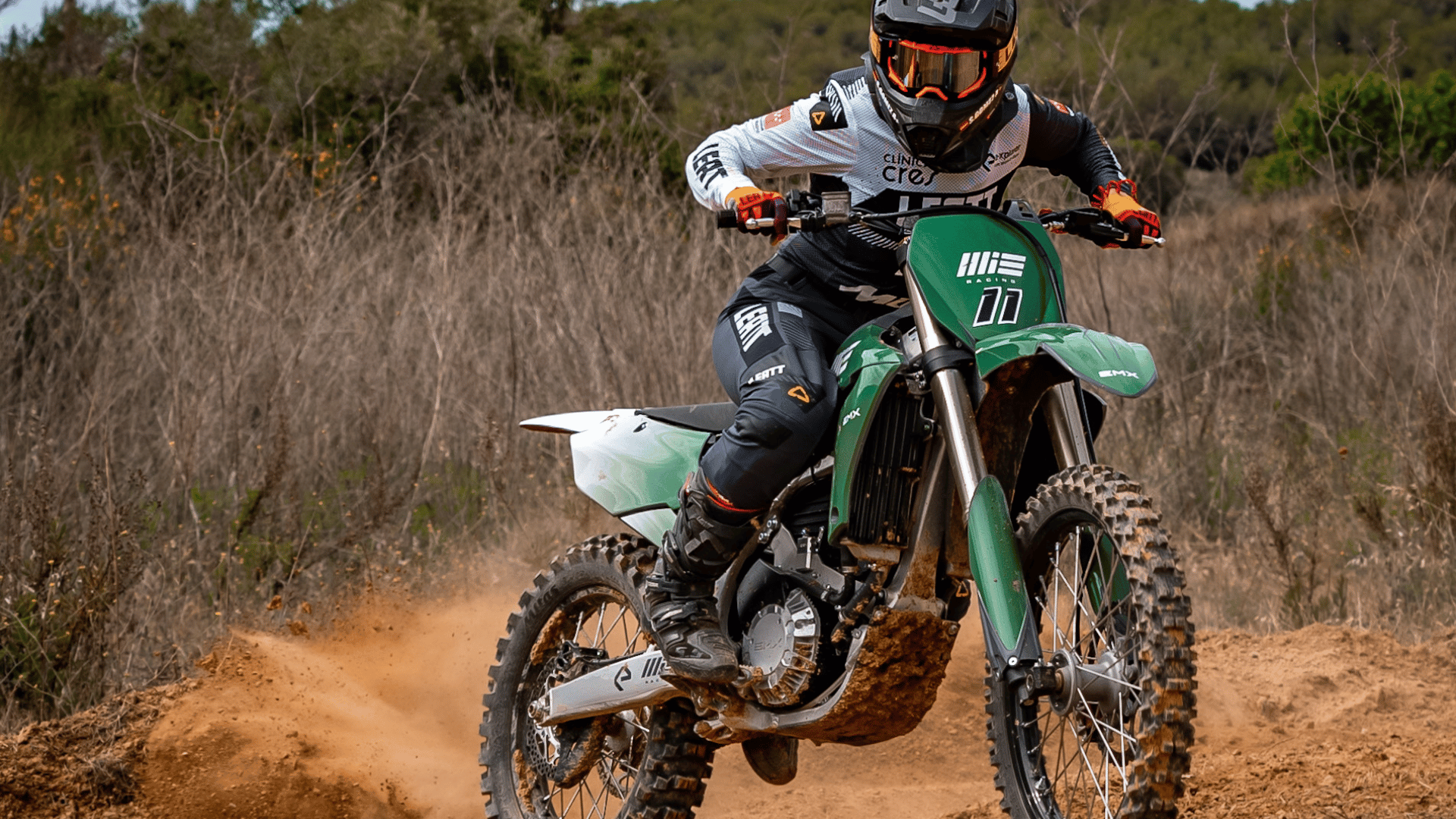
Electric technology: are motorcycle brands behind car manufacturers?
The automotive sector is shifting away from the combustion engine towards electric and hybrid power, but the motorcycle industry appears to be trailing behind the car industry. In this article, we explore the electric motorcycle scene in depth and consider the powerful role marketing can play in changing the game.
Electric vehicles - sales data and projections
Sales figures provide a clear indication of industry trends, and in the case of electric vehicles, cars are well in the lead over bikes. Electric car sales have surged in the past five years, with projections indicating a continued upward trajectory.
Looking back at the numbers over the past couple of years, according to the European Environment Agency, “Considerable progress in the uptake of electric cars and vans in the EU was made in 2022, with 21.6% of new car registrations being electric vehicles, totalling close to two million electric car registrations in one year.”
Drilling down into the United Kingdom car market specifically, the Society of Motor Manufacturers and Traders (SMMT) figures quoted by heycar.com show that, “More battery electric vehicles (BEV) were sold in 2023 than ever before with 314,687 registrations, 16.5% of all new car sales,” states heycar.com’s report.
On the other hand, electric motorcycle sales remain modest. Statista data for 2022 for the UK states that of the 109,327 motorcycles sold in the country that year only 3,600 (or 3.3%) were electric, whilst motorcyclesdata.com report that those numbers even declined in 2023. Statista’s latest annual data for the biggest European markets also shows that electric motorcycle sales are still pretty small, with 271,383 new motorcycles registered in Italy in 2022, but only 11,400 (4.2% of the total) being electric. In France, Germany and Spain the numbers for electric bikes were between 4% and 5% of the total units sold.
These sales data trends for electric cars vs motorcycles can also be seen in the U.S. market and the discrepancy in consumer adoption between the vehicles types may be attributed to factors such as limited model availability, pricing concerns, perceived range limitation and the firmly established culture of traditional internal combustion engine (ICE) motorcycles.
What else is holding electric motorcycles back?
The conundrum for motorcycle manufacturers is that electric battery powered bikes face specific constraints compared with cars, in terms of aerodynamics, as well as battery size, weight and range.
This superb video on the struggles of electric motorcycles by FortNine is now over two years-old but is still highly relevant, succinctly summarising why it’s been hard for the main motorcycle manufacturers to make ground with electric powertrains on bikes. The video sees presenter Ryan Kluftinger build his own electric motorcycle using the frame of a vintage Suzuki TC90.
Kluftinger then says of his bike, “At top speed I’m stuck with a single gear, so it uses batteries of power to put down enough torque just to fight wind. With cars Elon [Musk – Tesla, CEO - red] can solve the highway range problem. Give it extra slippery bodywork up top, another 1000lbs of battery below… But on a bike, my torso is what it is, I ain’t getting any more aerodynamic than this and if that [bike battery - red] weighs 1000lbs I’m gonna notice.”
He then explains that whilst electric cars are reaching 500km of highway range, for electric motorcycles that figure is far lower, between 75km-250km for many of the bikes currently on the market. Kluftinger adds, “It’s not that electric cars make sense, whilst electric motorcycles don’t. It’s just that e-motorcycles mainly make sense in the city.”
Notable electric bikes and brands
Despite the challenges, several motorcycle manufacturers have made strides in the electric domain, showcasing the potential of electric bikes. Electric first brands such as Zero and Silence have gained attention for their electric models, whilst brands such as BMW with their CE 04 scooter and Harley-Davidson with their LiveWire models do offer electric options. But sales figures are just not comparable with ICE motorcycles – and crucially so far no ‘Tesla of motorcycles’ has truly emerged.
These bikes do demonstrate, however, that electric motorcycles can be powerful, stylish, and suitable for everyday use, especially in urban environments where they are more welcome than ever, given they don’t emit any fumes. In Barcelona, Spain, for example, there are a plethora of lower powered electric motorcycle options on the streets, with brands such as Cooltra, Yego and Silence offering bikes you can pick up and drop off across the city. There are similar options in many major European and North American cities.
Electric bicycles and electric scooters (e.g. the ones you can even ride on the pavement/sidewalk) have their place in the market too and for many commuters they make more sense than an electric motorcycle, especially as you can carry them and charge them inside your home. The big brands know this and that’s why BMW, Ducati, KTM, Harley-Davidson and Yamaha are all already making and selling e-bikes.
Electric is great for off-road
Off-road electric bikes are carving their niche as well. The SUR RON Light Bee and Storm Bee, EMX Powertrain XF30, KTM FREERIDE E-XC and the high-performance Stark VARG showcase the versatility and capabilities of electric off-road motorcycles. These models are not only environmentally friendly but also great fun to ride, dispelling the notion that electric bikes compromise on power and excitement.
The no-noise aspect is extremely exciting for the motocross and enduro scenes, expanding the realms of possibility for the sports, e.g. they can be ridden almost anywhere without annoying residents or hikers. Electric bikes are also very easy to learn to use, removing another barrier to entry for off-road riding. The challenge is getting enough venues to install charging points to take powerful, electric off-road bikes mainstream.
Interesting FIM initiatives
The FIM has made efforts to promote electric motorcycles, with the MotoE championship (for which Ducati now supplies the racing bikes) and the FIM E-xplorer World Cup (which Honda will enter in 2024) being notable examples of how the organization is actively engaging with electric technology. These initiatives provide a platform for manufacturers to showcase their electric models, fostering competition and innovation in the electric motorcycle sector.
Meanwhile, in conjunction with the FIM and their environmental initiatives, MotoGP have stated that, ‘In 2024, fuel in all MotoGP classes will be of minimum 40% non-fossil origin, and by 2027, fuel in all MotoGP classes will be of 100% non-fossil origin. The fuels will either be laboratory-created, using components sourced from a carbon capture scheme, or derived from municipal waste or non-food biomass.’
Potential future trends to watch
Those alternative fuels could well play a big part in making the motorcycle industry greener, without going 100% electric. Battery powered motorcycles can be part of the solution, if not the complete answer. As emissions regulations in Europe and around the globe get stricter, the motorcycle industry is shifting towards electric technology, with advances in battery technology, increased charging infrastructure and collaborative efforts among manufacturers driving wider adoption of electric motorcycles.
However, given the constraints of electric motorcycles outlined above, it may well be the case that hybrid bikes like the Kawasaki Ninja 7 and even plugin hybrid technology will be the way the market takes us. Electric only bikes could become a firmly established sector, whilst bikes that get at least some of their power from alternative fuels could become the natural ‘replacement’ for the traditional ICE motorcycle.
Marketing based on education and information
Marketing electric bikes presents a unique challenge compared to traditional ICE motorcycles. Emphasizing environmental benefits in cities, cost savings on fuel, the ease of maintenance, the no noise and the ‘fun-to-ride’ aspects are key selling points.
However, overcoming preconceived notions about range limitations and an accessible charging infrastructure is crucial. Marketing campaigns should focus on highlighting the performance of electric bikes, dispelling myths, and showcasing the convenience of charging at home or public stations, as they become more commonplace.
Electric engines offer a range of advantages and drawbacks that have implications which consumers will want to understand easily. Battery production and recharging still create environmental issues and therefore the evolving technology that will produce the best outcomes for the consumer, the industry and the planet will likely be different for motorcycles than for four-wheeled vehicles.
To reach potential new audiences and convince the existing rider market about new technology on their bikes, manufacturers need to tailor their marketing strategies to address the concerns and preferences of diverse consumer segments. Collaborating with influencers, creating engaging online content and participating in events can help raise awareness and generate interest.
Whether you want help with marketing a new model of motorcycle, an existing product range or a motorcycle related service, contact the experienced team here at Motorcycle Marketing for a free consultancy session.
Keep on reading...
Motorcycle Dealer Websites: How to Go from Good to Great
Motorcycle Dealer Websites: How to Go from Good to Great Many riders, when looking for a new bike or dealer, they’re not walking through your doors first-they’re visiting your website. And that visit can either make or break their decision to move forward. While most motorcycle dealers today have a functional online presence, “good enough” […]
How Integrated Campaigns Fuel Real Results in Motorcycle Marketing
How Integrated Campaigns Fuel Real Results in Motorcycle Marketing In the motorcycle industry, it’s easy to fall into the trap of thinking marketing means just “running a few ads” or “posting on social now and then.” But brands that rely on isolated tactics often end up with scattered results and no real momentum. That’s because […]
The Newsletter: Your Most Underrated Marketing Tool
The Newsletter: Your Most Underrated Marketing Tool? When you think about motorcycle marketing, what comes to mind? Instagram reels of dusty trails, a perfectly lit flat lay of new gear, maybe a big stand at EICMA. But there’s one tool that rarely gets the attention it deserves-the humble newsletter, one of the most effective (yet […]