Social Media Marketing

A review of 2024: A year of growth and achievement
2024-12 A Review of 2024 A Year of Growth and Achievement 2

A review of 2024: A year of growth and achievement

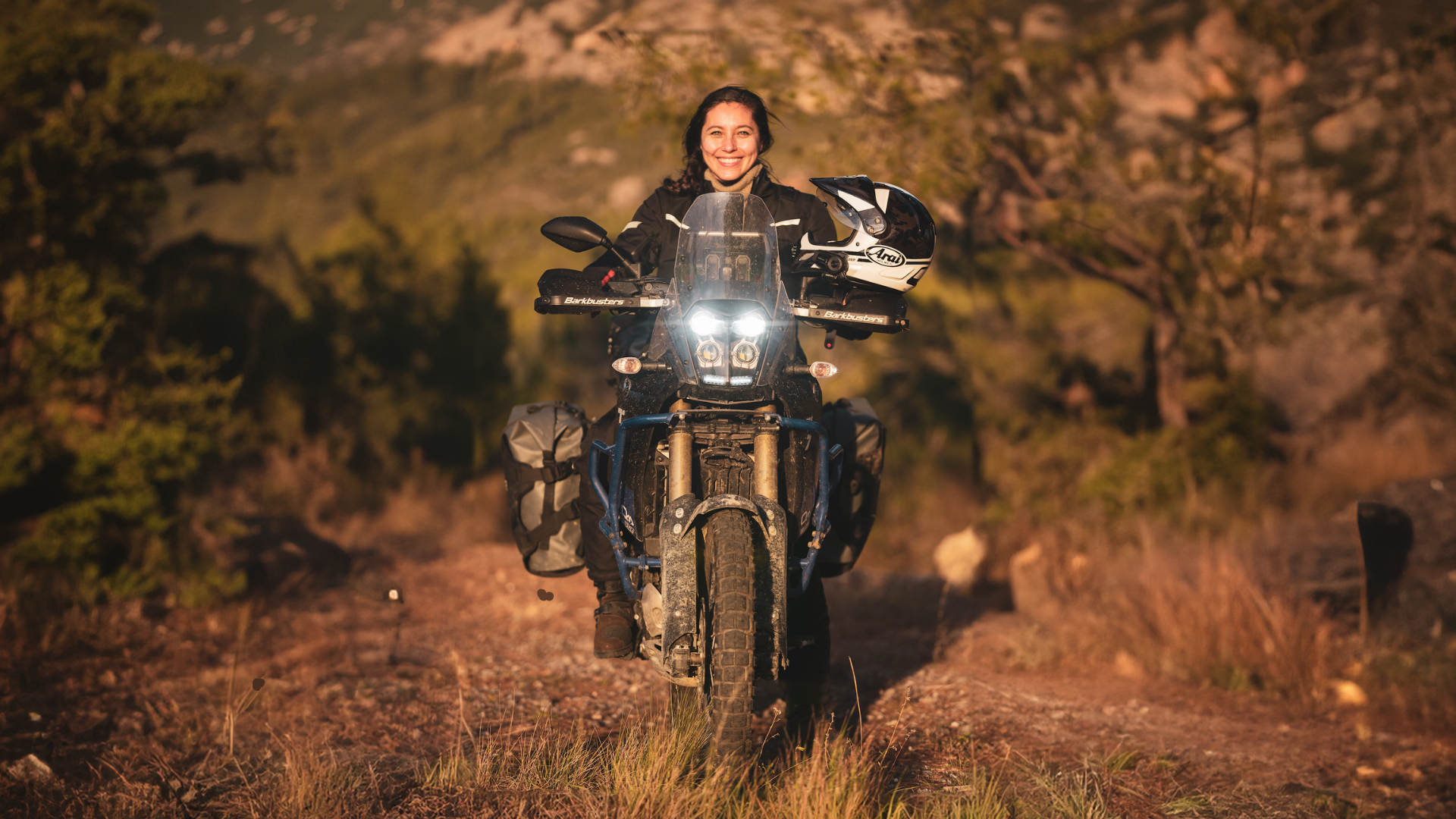
As we wrap up 2024, we’re taking a moment to celebrate the growth, challenges, and successes of what has been an extraordinary year for Motorcycle Marketing. This year was marked by record-breaking achievements, exciting collaborations, and personal and professional growth for our team. Our founder, Thalassa van Beek, and two of our key team members—Joseph Beale and Haley Rae Shoning—share their insights into the year behind us and what’s ahead for 2025.

2024: A Year of milestones

This year, we had the privilege of working with incredible clients across the motorcycle industry, from global brands to emerging innovators. “It’s been a fantastic year,” Thalassa says. “We’ve created content for KTM, supported Yamaha Motor Europe with the Ténéré Spirit Experience, and had our second year with Peak Design, where we strengthened their ambassador program and helped showcase their brand at major events like ABR Festival, MaxlRIDE, and EICMA.”

Joseph Beale, our Marketing Strategist & Copywriter, highlights the Yamaha Ténéré Spirit Experience as a personal favorite: “Helping to deliver high-quality content and great results for our clients, in particular on our Ténéré Spirit Experience account, has been a real buzz to work on and an exciting project which we’ve played a solid part in helping to grow.”

While big names like these are thrilling, it’s the growth of smaller clients like HAMMERLEDS that brings just as much satisfaction. “Seeing brand awareness increase for companies like HAMMERLEDS is such a joy for the whole team,” Thalassa adds.

Overcoming challenges and growing stronger

For Thalassa, 2024 marked a turning point in how the agency operates. “My personal goal this year was to strengthen the team so I could step away from my laptop from time to time, with the dream of one day exploring Iceland on my motorcycle,” she shares. Delegating more responsibilities wasn’t easy, but the team rose to the challenge. “I had to learn to let go, but my team made it so easy. They’re all excellent in their fields and amazing with clients,” she says.

Social Media Manager Haley Rae Shoning reflects on how her role has evolved alongside the agency’s growth: “As we expand our client base, I am given every opportunity to take on more responsibility where I can. Thalassa does an incredible job of mentoring and encouraging me, and also trusting in my knowledge and experience. I have never been a part of a team where I feel as trusted, valued, and supported.”

This year also brought challenges in managing cash flow with a growing team. “Paying a growing team before paying myself was tough at times, especially when clients were paying late,” Thalassa admits, “but by year-end, we’ve built a healthy buffer again, and clients have become more timely with payments.”

Projects that defined 2024

Two standout projects this year showcased what Motorcycle Marketing does best.

The Ténéré Spirit Experience was a thrilling collaboration. “We worked closely with their French team to create newsletters, social media content, blogs, and website copy,” Thalassa explains. Watching the community of fans and clients grow has been incredibly rewarding.

Then there’s Peak Design, a brand we’ve worked with for two years now. “In 2023, we introduced their motorcycle mounts to European riders. In 2024, we built on that foundation,” she says. From ambassador marketing to launching their new charging mounts and supporting them at major events, the team’s efforts helped establish Peak Design as a recognized name among motorcyclists.

Staying focused in a changing industry

As we know, the motorcycle industry faced economic challenges in 2024. “2024 was a tough year for the motorcycle industry, including in the US where I am based,’ Haley Rae says. “Powersports businesses were riding a high during the pandemic, but sales slowed down significantly after that. A lot of businesses took this time to really evaluate what is important to their teams and to their customers and have made changes that I think will set them up for success in the new year. Many companies needed the reminder that community is what the industry is all about, and they are turning their gaze to that. I think 2025 will see many motorcycle companies focusing their energy on authenticity and connection.”

Despite these hurdles, Motorcycle Marketing’s niche expertise proved to be a strength. “When you’re an industry specialist, opportunities will find you,” Thalassa explains. Joseph adds, “The quality and consistency of work, the credibility, and the niche knowledge in varied areas of the motorcycle industry, from street, to adventure, to electric, and to professional racing, really set Motorcycle Marketing apart in 2024.”

Gearing up for 2025

The year ahead is already shaping up to be another exceptional one. Thalassa’s top priority is keeping the team happy and excited. “My #1 goal is to secure contracts with brands that align with each team member’s skills and passions,” she says. ‘It’s the best way to ensure we can continue overdelivering for our clients.” In addition, she plans to enjoy what she worked on this year: "I recently signed up to join the Ténéré Travel Trophy in June 2025, so for the first time since starting the agency, I will take a week off."

Haley Rae, who recently got a new dirt bike, shares her personal goal: “My goal for the next year is to play a more active role in connecting Motorcycle Marketing with companies here in the US, so the business and my position within it can continue to grow as much as possible. I also have made it a goal to ride my dirt bike in all 50 states, so I’m hoping to start checking those off the list this next year.”

Joseph is also focused on delivering even more for the agency’s clients. “My goal is to help win, retain, and over-deliver on projects with the biggest bike brands in the world,” he says.

With exciting new collaborations and events like De MOTORbeurs, ABR Festival, EICMA, and Wheels & Waves already on the calendar, the team is eager to make its mark in 2025.

A heartfelt thank you

As we look back on 2024, we’re filled with gratitude for the brands, clients, and community that make this journey possible. “I’m so thankful to work with brands I already admired years ago and to help new companies grow,” Thalassa reflects. “This isn’t just a job; it’s a passion—and I couldn’t do it without my amazing team of fellow bikers.”

As we head into 2025, there’s no better time to gear up for new opportunities in the motorcycle industry, and we’re ready to help brands like yours make the most of it. Whether you’re looking to grow your audience, enhance your brand presence, or tackle new marketing challenges, the Motorcycle Marketing team is here to support you. Let’s make 2025 your best year yet—contact us today to schedule a free consultancy session and start planning your next big success!

Keep on reading...

How to Use User-Generated Content to Fuel Your Motorcycle Brand

How to Use User-Generated Content to Fuel Your Motorcycle Brand There’s no marketing quite as powerful as a fellow rider showing off their bike, their gear, or their latest trip-and tagging your brand while doing it. That’s the magic of user-generated content (UGC), and in the motorcycle world, it’s a goldmine. From road trip photos […]
Motorcycle industry event calendar 2026

Motorcycle industry event calendar 2026 In the dynamic motorcycle industry, events remain a cornerstone for connecting enthusiasts, professionals, brands, and riders. As we kick off 2026, we’re looking ahead to the key motorcycle industry events in Europe and the USA this year and outlining which ones are most relevant to companies in specific niches. Motorcycle […]

Riding Through 2025: Our Year in Review

Riding Through 2025: Our Year in Review As 2025 comes to a close, it’s time for our annual Motorcycle Marketing tradition-a look back at the highlights of the year, some of the lessons learned, and a peek at what’s to come. This year has been big. We grew our team, expanded our client base, launched […]

The importance of owning first party data for motorcycle brands

2024-08.2 - The importance of owning first party data for motorcycle brands

The importance of owning first party data for motorcycle brands

In a rapidly evolving digital landscape, the importance of owning first party data on customers and potential consumers has never been more critical, particularly for brands in the motorcycle industry. In this latest Motorcycle Marketing deep dive, we’ll look at how brand managers, product owners and marketers can take greater control of their customer data as third-party data reliance fades away and we enter a ‘cookieless’ future.

Let’s define first party data

First party data includes basic information on customers and potential future customers, such as name, email addresses, home address, phone numbers, purchasing data and additional demographic details. It can also include information on browsing behavior, content consumption, location, device, and the time of day specific actions are taken by a user or consumer.

It is primarily data that businesses collect directly from their customers and prospects, or data purchased or acquired (hopefully legally) via another source. First party data is therefore highly valuable in terms of its relevance to marketing and selling directly and efficiently to customers.

As companies face increasing privacy restrictions in the digital realm due to tightening regulations, owning this data is becoming ever more crucial for motorcycle manufacturers, dealerships, e-commerce platforms, accessory suppliers, insurance companies and other relevant service providers in our industry.

The decline of third party data

Digital marketing is currently undergoing a significant shift. With the decline of third party cookies and increasing privacy regulations, brands that have traditionally relied on third-party data from platforms like Meta and Google are finding themselves in a precarious position. If you are always spending money through paid ads to reach your audience you are trapped in reliance on that platform. If you ever need to cut your marketing spend due to cashflow, you are stuck.

As this highly informative Wired article on the topic explains, the era of third-party cookies is coming to an end, and businesses that fail to adapt to this new reality may struggle to connect with their audience effectively.

As Wired explain: “Soon, third-party cookies will no longer be allowed to track individuals across the web, harvesting reams of information to help deliver targeted ads. Already, many browsers are blocking them as tech companies rush to comply with the California Consumer Privacy Act and the European Union’s General Data Protection Regulation. There’s a harsh reality check coming for digital marketers and companies that still rely on cookies to identify, understand, and reach customers.”

For motorcycle brands, many of which have long depended on third party platforms to communicate with their customers, this shift highlights a critical vulnerability. When you rely heavily on paid advertising (and even an ‘organic’ social media presence) on third-party platforms, you become dependent on them for your marketing success. This reliance can be financially draining and limit your ability to pivot your marketing strategy. It’s not that online advertising will no longer be relevant or effective, it’s simply that it's likely to become more expensive and less targeted.

With regards to how social media fits into this picture, the simplest way of considering it is that even when you have lots of social followers or subscribers you are still reliant on the algorithm of the social platforms for your content to reach them. That’s not to say social media is of any less relevance or importance as we begin to focus increasingly on first party data-led marketing, rather that a robust marketing strategy will include an effective approach on all fronts.  

Why first party data matters specifically for motorcycle brands

First-party data offers motorcycle brands a way to take control of their marketing efforts and build more meaningful, long-term relationships with their customers. Here's why this is particularly important for businesses in the motorcycle industry: 

Enhanced personalization and targeting

Motorcycle owners and riders are a diverse audience with highly varied preferences and interests. First party data allows brands to segment their audience more effectively, enabling them to deliver personalised content, offers and experiences that resonate with individual customers. For example, a motorcycle manufacturer can use demographic information to target younger riders with promotions for smaller capacity bikes, while a dealership can tailor communications about touring models to older customers. This approach ties in perfectly with the approach we explored in this previous blog post on How to market to riders of different age demographics & skill levels.

By understanding (and owning the data on) your customers' preferences, you can market the most relevant models, products and services to them, yielding higher sales, fostering loyalty and gaining repeat business. And that is done most effectively when you are in control of your customers’ data first hand. 

Cost-effective marketing

By taking greater ownership of first party data, brands in the motorcycle industry actively reduce their reliance on paid advertising through third party platforms. Instead of constantly spending money on ads to reach your audience, you can communicate directly with them through owned channels like your website, email newsletters, SMS marketing and direct mail. This approach not only cuts costs but also allows you to maintain control over your messaging and customer relationships.

First party data which you are in charge of can also be used to create lookalike audiences for paid campaigns, ensuring that your advertising efforts are more targeted and cost-efficient. This strategy allows you to stretch your marketing budget further while still reaching potential customers who are likely to be interested in your brand.

Data privacy compliance

With the increasing focus on data privacy regulations like GDPR in Europe and CCPA in California, owning first-party data is also essential for compliance. When you collect data directly from your customers, you have more control over how it's used and can ensure that your practices align with legal requirements.

For motorcycle brands, which often operate in multiple regions with varying regulations, having a solid first party data strategy can simplify compliance and reduce the risk of costly fines or reputational damage.

Leveraging first party data for success

To fully harness the power of first party data, motorcycle brands should consider a multifaceted approach that includes:

  • Effective Newsletters: Regularly engage with your audience through informative and engaging newsletters. Share updates on new models, promotions, upcoming events and tips for riders. This keeps your brand relevant and fosters a sense of community. Check out our guide on How to make newsletters valuable for your brand.
  • Strong Organic Reach: Invest in creating high-quality content across various social platforms. Building an organic following reduces your reliance on paid ads and allows you to connect with your audience on a deeper level. You’re still, of course, dependent on the algorithms of the likes of Meta, Google, YouTube, Tiktok and LinkedIn, but if your audience is spread across various platforms, you work effectively with influencers and your own content is strong you can still achieve great visibility.
  • Sticky Web Content: Your website should be more than just a sales platform—it should be a hub of valuable content. Offer blogs, tutorials and videos that cater to your audience's interests and keep them coming back for more.
  • Physical events: Attending the most relevant motorcycle industry events will ensure you connect with your audience meaningfully and memorably. Events are not only great for collecting first party data but also for building brand loyalty and community. Being part of the rider community at specific events is something we value highly at Motorcycle Marketing and we keep this guide to Which motorcycle industry events should you attend updated regularly.
  • Connecting with riders more actively: Creating an app which your customers use as they ride is one of the most effective and valuable ways to gather first party data from them. The Royal Enfield app offers features such as navigation, on-the-go music, call support and real-time alerts.  

Tying it all together

In a world where digital marketing is becoming increasingly complex, first party data is a critical asset for motorcycle brands. By owning and effectively utilising this data, you can personalise your marketing efforts, reduce costs, improve customer loyalty, increase sales, improve ROI and ensure compliance with privacy regulations. Those who invest in building and maintaining a solid first party data strategy will be well-positioned to thrive in the future.

If you're looking for ways to effectively and efficiently collect more first party data, get in touch with the Motorcycle Marketing team of experts.

Keep on reading...

How Sub-500cc Motorcycles Took Over Europe, The UK And Beyond

How Sub-500cc Motorcycles Took Over Europe, The UK And Beyond Across the globe sales of 300cc-500cc motorcycles have been booming and it’s easy to see why. Light enough to be easy to handle, capable enough to commute on, tour with and hit dirt roads on, they come without the price and weight of big ADVs […]

Motorcycle Advertising Ideas That Actually Drive Sales

Motorcycle Advertising Ideas That Actually Drive Sales What works today when you’re selling bikes, parts, apparel or services? A successful approach to selling B2C logically differs from selling B2B in terms of tone and placement, with the product or service dictating the relevant path of effective campaigns. This guide to the best motorcycle advertising ideas […]

Tsubaki becomes Official Global Supplier of MXGP

Tsubaki becomes Official Global Supplier of MXGP [PRESS RELEASE] Infront Moto Racing and Tsubaki are proud to announce their partnership that sees the Japanese manufacturer of premium motorcycle chains become an official global supplier for MXGP.  Tsubaki has long been familiar with competition, both on and off-road. From race wins to world titles, to Dakar victories and […]

How to create a content calendar for the year ahead

Motorcycle Marketing - 2022-12.1 Creating a content calendar for the year ahead

How To Create a Content Calendar For the Year Ahead

Creating a content calendar is an essential part of building a marketing plan that will help you reach your target audience. The more organised you can be and the further ahead you plan, the less stress you’ll experience along the way, allowing you to focus on the quality of your output and hitting your KPIs.

Firstly though, what is a content calendar? In this context, we will explore creating a content calendar which includes first planning content production, then making a subsequent plan for when the content will be used on social media and in your wider marketing efforts.

For those involved directly in motorcycle racing, whether it’s a championship such as MotoGP, MXGP, Hard Enduro or one of the other numerous forms of two-wheeled competition, forward planning is usually based around the race calendar. But for brands indirectly linked to racing, or those who have no association with the racing scene, planning ahead is just as important.

What Content Would You Publish In an Ideal World?

A pragmatic approach to planning ahead with your social media and marketing content is to set out what you would like to publish in an ideal world and work back from there. Knowing that it may not be practical or plausible to produce all the content on your wish list, you can then undertake a feasibility review of your dream plan.

Once you’ve plotted out the major pieces of content you’re going to produce you can work on a detailed production plan for each major video or photo shoot in the months ahead. Then you can fill out your content calendar around those events, to ensure a consistent rate of content publication throughout the year. In this previous blog post we covered how to maximise photo and video shoots to get the most content from them.

Getting Practical

It’s important to make a list of products that need to be promoted at specific times of year, define the content formats that you know will engage with your audience, then fill out a week-by-week plan, including the days and times that you will post to social media and a mix of content types to be published.

A content plan should include:

  • A summary production plan of when content will be made
  • A description of the content you plan to publish
  • The date and times the content will go live
  • The social network and account where the content will be published
  • Additional marketing channels you will publish on (web content, email marketing, content to share with influencers and press)
  • Creative assets (photos and videos) and pre-approved captions to be published with the assets
  • Any links, mentions and tags to include

In terms of setting everything out in a clear plan, the friendly folks at Hubspot and Jotform offer free social media content calendar templates which you can use as the base to build from. Alternatives include creating a designated Google Calendar for your content, or simply building a calendar yourself in Google Sheets.

When Should I Publish My Content?

In this post from Hootsuite on the best time to post on Facebook, Twitter and Instagram researchers analysed over 30,000 social media posts to see if certain days and times typically get more engagement than others and – SPOILER ALERT – they found that the best time to post on social media overall is 10am on Tuesdays, Wednesdays and Thursdays. In the article they also reveal their findings on the best time to publish per platform. Having said that, every audience is different, so it’s even better to experiment with different times and see what works best for your brand.

How Much Content Should I Publish?

The answer to this should really be, publish as much content as you can with the resources you have available, whilst also aiming to make that content meaningful.

Large, established brands such as Ducati have the resources to produce enough content to be publishing interesting posts on a daily basis. They will be producing content via in-house teams, as well as agencies, country-level franchises, race teams, athletes, influencers and even customers themselves.

A smaller brand such as Mitas tyres publishes less frequently, but they do a fine job of mixing up fun content such as burnout videos, photos and videos of racing, incredible action shots, beautiful adventure riding pictures, street riding content, event promotions, seasonal content and specifically polished product imagery.

If you are managing social media and marketing for a rider clearly the amount of assets that can be produced and published depends on how busy your rider is. Likewise, if you’re a content creator yourself it’s all about the amount of time and energy you can put into your work.

Off-road and freestyle rider Jordan Booker does a great job of publishing frequent, engaging content which he clearly has planned out well in advance. Jordan is able to push out a great mix of content such as photos, shorter and longer edits, mobile filmed and professionally filmed video, shots on the bike and behind-the-scenes images. Whenever he’s at an event or track and has time on his bike he produces an array of content to publish over the following days.

Visibility Content vs Promotional Content

As you build your content calendar look for combinations of photos and videos that will grab the attention of your audience and positively trigger the news feed algorithm of social networks, ensuring you get maximum visibility.

Ultimately the mix of content you publish should match your business goals. This may differ from platform to platform. You might split your planned content out like this:

  • 30% of content is aimed at driving traffic to your website
  • 30% of content will be created in house just to drive engagement and go softer on commercial messaging
  • 20% of your content will support specific commercial goals (selling products, lead generation, capturing user data etc)
  • 10% of content will be user-generated content from influencers and collaborators to drive engagement and credibility
  • 10% will be behind-the-scenes content from your factory, shops or offices

Those are just suggestions and the percentages can be adjusted depending on what you’re aiming to achieve.

Other models, as described by the knowledgeable team at Brand Muscle, also include the 80/20 rule of content marketing, whereby 80% of content should be useful to your audience (it educates, entertains, or offers a solution to their problems) whilst only 20% should explicitly promote your business.

Or you may find that the social media rule of thirds, as explained by Neil Patel here, is better suited to your business. The basic concept with the rule of thirds is:

  • 1/3 of content promotes your business, converts your audience in customers and generates profit
  • 1/3 of content shares ideas and insights from thought leaders in your industry
  • 1/3 of content should drive personal interactions with your audience

If you’re looking for advice on how to create the perfect content calendar, book a free consultation with our expert team by emailing hello@motorcycle.marketing.

Keep on reading...

How Sub-500cc Motorcycles Took Over Europe, The UK And Beyond

How Sub-500cc Motorcycles Took Over Europe, The UK And Beyond Across the globe sales of 300cc-500cc motorcycles have been booming and it’s easy to see why. Light enough to be easy to handle, capable enough to commute on, tour with and hit dirt roads on, they come without the price and weight of big ADVs […]

Motorcycle Advertising Ideas That Actually Drive Sales

Motorcycle Advertising Ideas That Actually Drive Sales What works today when you’re selling bikes, parts, apparel or services? A successful approach to selling B2C logically differs from selling B2B in terms of tone and placement, with the product or service dictating the relevant path of effective campaigns. This guide to the best motorcycle advertising ideas […]

Tsubaki becomes Official Global Supplier of MXGP

Tsubaki becomes Official Global Supplier of MXGP [PRESS RELEASE] Infront Moto Racing and Tsubaki are proud to announce their partnership that sees the Japanese manufacturer of premium motorcycle chains become an official global supplier for MXGP.  Tsubaki has long been familiar with competition, both on and off-road. From race wins to world titles, to Dakar victories and […]

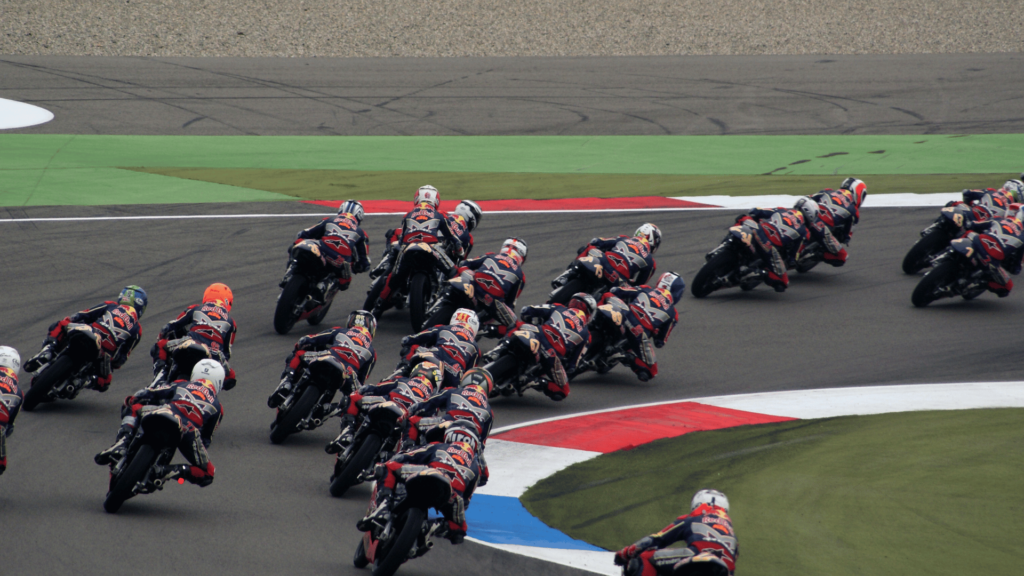
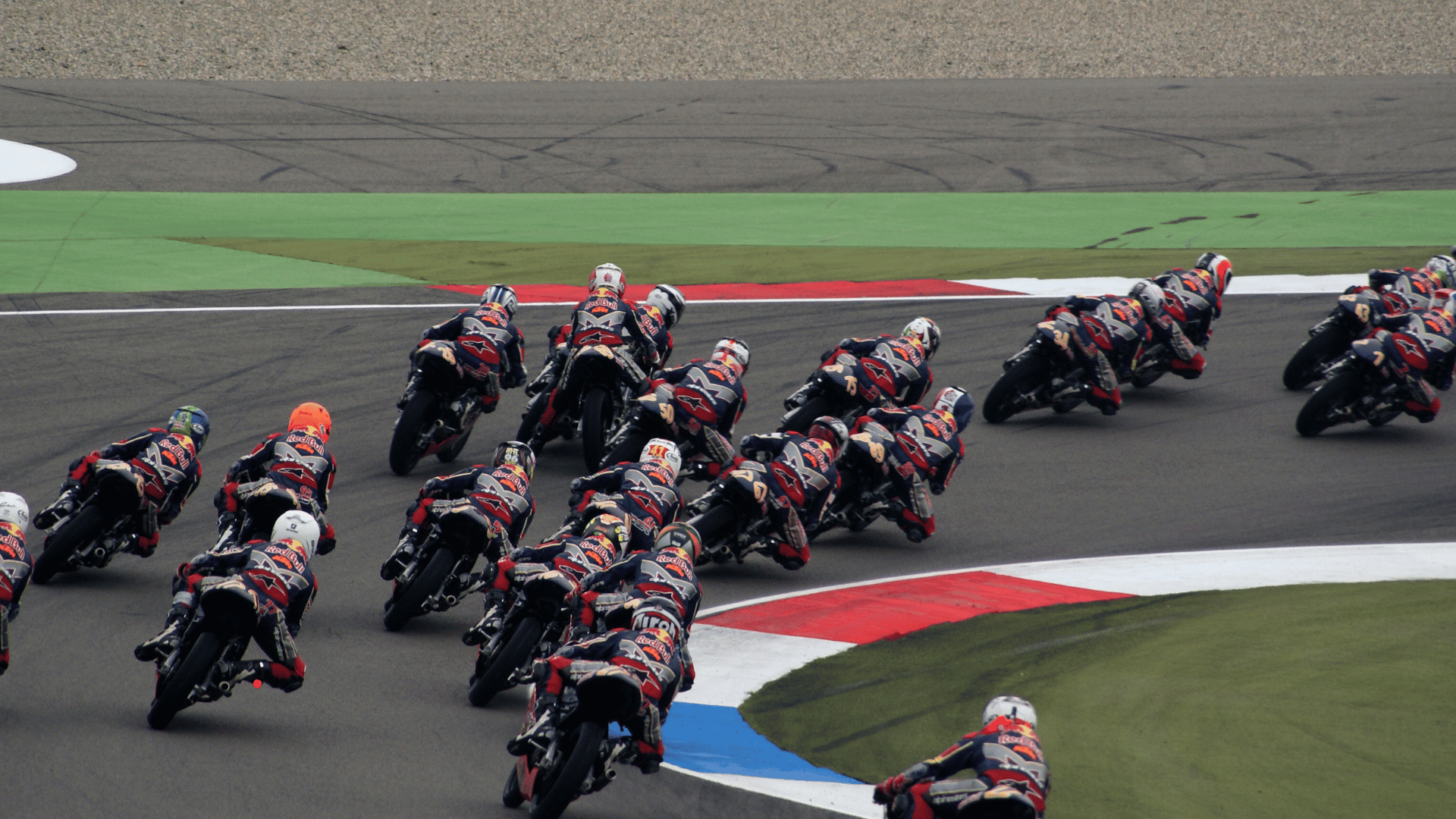
red bull rookies cup riders on race track

Marketing strategies for a new racing team

red bull rookies cup riders on race track

Marketing strategies for a new racing team

Starting a new racing team in a prestigious series like MotoGP, WorldSBK or MXGP presents an exciting opportunity to capture the attention of sponsors, media and potentially millions of motorcycle riders worldwide. In this guide we will explore how to successfully market a new team, with a multifaceted approach that leverages various marketing channels, engages with fans, and creates a strong brand identity.

Several new teams have been launched to participate in the championships mentioned above in recent seasons, whilst the arrival of new series such as the WorldWCR (FIM Women’s Circuit Racing World Championship) and the FIM E-Xplorer World Cup have led to the creation of many new racing teams.

Mission and brand

Before even beginning to create the digital assets and wider marketing material to promote your team it’s important to define the team’s identity and mission statement.

Perhaps the new team is an independent unit which is being established to promote young talent from a specific country/region such as MLav Racing, which is now in its third season giving opportunities to British riders at World Championship level. Or maybe it’s a new full factory effort from a manufacturer aiming to win at the highest level, with elite riders onboard from the word go, such as Monster Energy Triumph Racing in the 2024 MX2 World Championship, or Ducati MXGP with Tony Cairoli.

Or it might be a spin-off from an existing racing structure, venturing into a new electric championship and aiming to advocate for the promotion of EV technology.

The clear definition of what the team stands for, what its aim is and how it must present itself, will affect all the steps that follow from a marketing perspective. That will include establishing the brand of the team itself and the associated aesthetics such as logo, bike livery, rider and team uniforms, the design of the website and many other visual elements. 

Taking an example from the new WorldWCR championship, the Sekhmet Racing Team are very clear about their values on their website, with founder Maddi Patterson stating, “Once the visor is down, nothing else should matter. Enter Sekhmet International Motorcycle Racing Team. We do things differently, because we can. The team epitomises drive, determination, bravery and single-minded resilience.”

With a clear mission and clear goals defined, it is then easier to set out on the journey of recruiting riders, attracting partners and making the assets you will need to market your team successfully.

Rider recruitment and securing sponsorships

There will be a number of factors that impact your ability to attract riders to the project, including budget, your existing network of contacts in the sport, the guarantees you can give around the competitiveness of your racing package and the stability of your commercial structure. In addition, riders will be assessing who you have working for the team on the sporting and technical side, as compared with your competitors.

The choice of riders to represent your team will be fundamental to the on-track performance, but also to the commercial success of your structure, based on their marketability and capacity to generate media exposure and sponsorship interest. Rider recruitment should take into account all those considerations, including sporting ability, professionalism, potential upside in terms of talent development, ability to communicate well with media and partners, existing digital/social media reach and your gut feeling on whether they will be a solid, helpful person for you and your staff to work with.

An important question to answer is, ‘Can you collaborate with riders to collectively bring sponsors to the team?’ Securing sponsorships and strategic partnerships is vital. Successful new teams are able to combine the power of underlining their overall appeal to sponsors (and the target audiences of their sponsors), along with strategic recruitment to attract the right type of riders to subsequently attract the desired level of commercial partners.

This may not be an easy balance to strike from day one, but the learnings you take from your first season of competition will be invaluable as you approach your second and third seasons, in terms of defining realistic budgets, working with riders who deliver both sporting performance and commercial value and over-performing on driving ROI to your sponsors and suppliers.

You should specifically identify brands that align with your team's ethos and create compelling sponsorship proposals that emphasise the mutual benefits of collaboration. Put yourself in the shoes of the decision makers on the sponsor side and consider how to provide them with what they are looking for by backing your project. Check out this article which guides potential sponsors on what they should look to achieve from committing to back a team or rider.

You can deliver value for your sponsors by ensuring they are featured prominently across your marketing channels, uniforms, bike livery, pit box and hospitality truck. Your team can create co-branded content with sponsors and you can ensure that they are well looked after when it comes to rider access and hosting them at team events and races.

Most championships already have strong teams in place when it comes to attracting sponsors and giving them the requisite VIP experience at races. In many cases championship organisers can advise new teams how to get up to speed with sponsorship liaison and managing corporate hospitality, so seek to make strong connections with your colleagues at championship level.

Taking care of your sponsors long term will pay dividends and is vital to marketing any racing team successfully. Your sponsors will help you grow from day one and if you have the right partners they can be powerful allies in growing your structure, reaching bigger audiences and increasing fan engagement.

Creating relevant content

In order to promote the team professionally you will need a basic archive of initial photos and videos to use on the team’s website, social media channels, to share with sponsors and to distribute to partners and media.

Photos should include studio shots of your riders and team staff in uniform, with sponsor and partner logos clearly visible. Likewise, professionally shot ‘reportage’ style shots from training sessions, team events, track events and races of your riders and staff at work are highly useful assets.

You should also make a plan for which video content you’ll produce before you launch, before your first race and what you’ll shoot (or get access to) at races. You may choose to create a mix of interviews, teasers, race highlights, sponsor focused videos and behind-the-scenes or documentary style content, mixing things up with a combination of 9x16 portrait format for reels or stories and 16x9 landscape shot longer social media videos.

Here on the Motorcycle Marketing blog we’ve previously covered the topics of How to make the most of video & photo shoots and How to create a content calendar which provide highly relevant tips here.

Whether you’re producing photos or videos at the racetrack or at other events, it’s vital to have strong pre-production, production and post-production plans to ensure you get the most from your riders and staff. Meanwhile, many championships have specific rules over the use of race footage and it’s important to understand those regulations and abide by them, making the most of whatever you are allowed to use.

If you need help with planning, producing and publishing photo and video content, feel free to contact Motorcycle Marketing for a no obligations consultancy session. Our team have produced and published content for the likes of MotoGP, WorldSBK and the Dakar Rally and we also have plenty of experience working with new teams and start-ups.

A strong digital presence

At the core of your digital marketing plan there should be a well-produced website which serves several functions. You will not need a complicated, expensive or elaborately programmed site, so beware of website development companies trying to sell you something you don’t need.

Incorporating the branding, logo, mission statement and visual content mentioned above your site should have some specific sections and content. The site should include a well-presented homepage, a news/updates section, a team page (with rider and staff profiles), a newsletter sign-up function and an About Us page which communicates the background and mission statement of the team.

It should also have a sponsors/suppliers page, a contact page and links to your social media channels. If you are planning to sell merchandise a solid Shopify store can easily be plugged into the site. Create a photo or video archive on the site, only accessible to fans and media who register with you to gain access to the contents. The website should be quick to load, mobile friendly and SEO optimised.

Winning on social

Creating a social media strategy from zero does not need to be complicated, but there will be some ground rules to follow as this article on just that subject sets out. The MotoGP World Championship publishes social media content on Facebook, Instagram, X.com (formerly Twitter), TikTok, YouTube, LinkedIn, Snapchat, Twitch, WhatsApp and Telegram, but for a team, especially a new team, it is wiser to focus on three or four channels to start with.

Instagram, Facebook and possibly LinkedIn, YouTube and/or TikTok (depending on your objectives and target audience) may be just what you need to get started. Work out which social platforms are most important for your team and from there you can build a content calendar and recruit the right internal resources, or external agency to produce and publish the relevant content per platform.

The basic key metrics to work towards on social will be audience growth, reach and engagement and those will be important to analyse and optimise for as you look to enhance the brand power of your team and its ability to deliver value for your stakeholders and commercial partners.

Press and communications

For managing press and communications efficiently – which is essential for any professional racing outfit - many teams rely on a combination of a full-time press manager (or indeed department depending on scale), plus assistance from a specialist agency, such as Motorcycle Marketing.

Effective media relations are vital when it comes to building your team’s profile and communicating positively with journalists and content creators. The goal should be to develop a comprehensive media kit, be on the radar of all relevant media contacts nationally and globally and maintain regular communication with media to secure consistent coverage.

Your press team should be adept at creating and distributing press releases and newsletters, organising launch and sponsor events, handling media at races, providing media with all relevant assets they request and handling requests/opportunities for interviews with your riders and team staff. 

Before Trackhouse Racing joined the MotoGP grid full-time for 2024, they pulled off a notable coup by signing Davide Brivio as Team Principal. Not only is Brivio one of the most experienced and respected figures in the paddock, in addition to his management and technical sporting knowledge, he is a master when it comes to media relations, easing the work of the Trackhouse press team behind-the-scenes.

Bringing it all together

In summary, marketing a new racing team in any national, regional or World Championship requires a strong brand, intelligent recruitment, strategic partnerships, robust content production, active fan engagement and effective media relations. The teams we have mentioned in this article have effectively used various marketing strategies to establish and promote their presence in a highly competitive racing scene, by using the tactics as set out above.

For further related reading check out our guide on What to consider when starting a new brand from scratch or contact us today for a free introductory session on how we can help your brand or team hit your marketing goals.

Keep on reading...

How Sub-500cc Motorcycles Took Over Europe, The UK And Beyond

How Sub-500cc Motorcycles Took Over Europe, The UK And Beyond Across the globe sales of 300cc-500cc motorcycles have been booming and it’s easy to see why. Light enough to be easy to handle, capable enough to commute on, tour with and hit dirt roads on, they come without the price and weight of big ADVs […]

Motorcycle Advertising Ideas That Actually Drive Sales

Motorcycle Advertising Ideas That Actually Drive Sales What works today when you’re selling bikes, parts, apparel or services? A successful approach to selling B2C logically differs from selling B2B in terms of tone and placement, with the product or service dictating the relevant path of effective campaigns. This guide to the best motorcycle advertising ideas […]

Tsubaki becomes Official Global Supplier of MXGP

Tsubaki becomes Official Global Supplier of MXGP [PRESS RELEASE] Infront Moto Racing and Tsubaki are proud to announce their partnership that sees the Japanese manufacturer of premium motorcycle chains become an official global supplier for MXGP.  Tsubaki has long been familiar with competition, both on and off-road. From race wins to world titles, to Dakar victories and […]

A guide to creating a social media strategy from zero

2024-07.2 A guide to creating a new social media strategy from zero

A guide to creating a social media strategy from zero

Starting a new brand or overhauling your social media strategy in the motorcycle industry can be challenging. Whether you're launching a new business, restructuring your social media presence, or entering a new role, this guide will help you create an effective social media strategy targeting riders.

We will cover the best ways to reach your audience, the basics of major platforms like YouTube, Facebook, Instagram, and TikTok, and how to create engaging content that drives growth and sales. Additionally, we'll look at the importance of analytics and KPIs, and how to use often overlooked platforms like Reddit, WhatsApp channels, and Discord.

Research and identify your target audience

The first step in creating a successful social media strategy is to understand who your target audience is. Consider factors such as:

  • Age: The age of the rider will determine their interests and what social media platform they’re using.
  • Experience Level: New riders have different needs and interests compared to experienced riders.
  • Interests: Adventure riding, touring, off-road riding, racing, commuting, or custom bike building can all attract different demographics.
  • Geography: Riders in cities will likely have different preferences compared to those in rural areas and audiences in specific countries should be addressed in a relevant way.

Conduct surveys, engage with online forums, and analyse your current customer data to get a clear picture of your target audience.

Define the best social media platforms to reach your audience

Once you have identified your target audience, the next step is to determine which social media platforms they are on:

  • Facebook: What was once the holy grail of social media may seem to some like it’s falling by the side of the road, but Facebook is still great for reaching a broad audience, including older demographics. While people nowadays post less on their own profiles, they still consume enormous amounts of content on the platform and are very active in Facebook Groups.
  • Instagram: Popular among younger adult audiences (70.4% of them being under 35 and almost 85% under 45) but most people are there these days. It’s perfect for visual content, such as photos and short videos of bike models, accessories, rides, and events. Reels have become a way of really boosting your reach and getting your content seen by new audiences.
  • YouTube: Typically effective for long-form content but their Shorts feature has seen it competing against TikTok and Instagram and bringing content to new audiences. Use it for tutorials, bike/accessory reviews, and ride videos to engage both new and experienced riders.
  • TikTok: Known for its popularity among younger audiences, TikTok is ideal for short, engaging videos. It’s a platform where creativity and trends dominate, so you have to spend time getting to know what works and what doesn’t, but the platform is perfect for showcasing the fun and exciting aspects of riding.

Content creation

Creating the right kind of content is essential for driving growth, engagement, and sales. Educational content, such as tutorials, how-to videos, and maintenance guides, can attract both new and experienced riders. This type of content establishes your brand as an authority and provides ongoing value to your audience.

Product reviews and demonstrations are also great content for engagement, as detailed reviews of motorcycles, gear, and accessories are sought out by potential buyers but don’t have the longer term benefits of the tutorials and how-tos.

Adventure and lifestyle content is particularly engaging for riders but typical ‘day-in-the-life’ of specific athletes, pro-riders, engineers, influencers & ambassadors content is favoured by the algorithms. Sharing stories and visuals of rides and the motorcycle lifestyle can inspire and engage your audience, especially on visual platforms like Instagram, TikTok and YouTube.

Tips for creating engaging and relevant content

Knowing your audience is key. Tailor your content to the interests and needs of your target demographic, using surveys, polls, and engagement metrics to understand what they care about. Consistency helps build a loyal following, keeps your brand top-of-mind and is rewarded by the algorithms, so regularly post content on a fixed schedule to keep engagement up and maintain visibility.

Engage with your audience by responding to comments, asking questions, and encouraging discussions. This fosters a sense of community and can provide valuable feedback for your content strategy.

Analytics and KPIs

To ensure your social media strategy is effective and has the desired outcomes, it is important to track key performance indicators (KPIs) and use analytics to refine your approach. There are a few key metrics you can focus on to get started.

Engagement rate reflects how actively your audience interacts with your content through likes, comments, shares, and saves. High engagement indicates that your content resonates well with your audience. Take a look at this Instagram account for example, that of a Motorcycle Marketing client, the Yamaha Ténéré Spirit Experience. The number of likes on the images and photos indicates a high engagement rate for the audience size, sometimes as high as 20%.

Reach and impressions help you understand the extent of your content’s visibility. Reach represents the total number of unique users who have seen your content, while impressions account for the total number of times your content is displayed, regardless of whether it was clicked or not.

Other metrics to keep in mind include the increase or decrease in your follower count. A steady growth pattern indicates successful strategies in attracting and retaining audience members. Click-through rate (CTR) measures the percentage of users who click on a link in your post compared to the number of impressions, providing insight into the effectiveness of your call-to-action (CTA).

Regularly reviewing your metrics is key to identifying trends and patterns in your social media performance. Determine which types of content generate the most engagement or which times of day your audience is most active. Use these insights to inform your content planning.

An easy start is optimsing your posting schedule by looking when your audience is most active and scheduling your posts accordingly. Platforms like Youtube, Instagram and Facebook provide insights on the best times to post based on your followers’ activity.

Additional platforms

In addition to mainstream social media platforms, Reddit, WhatsApp channels, and Discord offer unique opportunities to engage with the motorcycle community. Reddit is an online forum, ideal for engaging with niche communities through subreddits dedicated to motorcycles. It’s an excellent platform for in-depth discussions, sharing detailed content, and gathering feedback. The Ducati Reddit thread, for example, has a highly engaged community and the brand do well to monitor, engage and interact with its members.

WhatsApp Channels allow for direct, real-time communication with your audience. They are ideal for sharing updates, exclusive offers, and engaging in more personal interactions. The MotoGP WhatsApp channel launched in 2023 and now has over 6 million followers.

Discord is perfect for creating a community around your brand. It supports real-time chat, voice and video, making it ideal for hosting Q&A sessions, live discussions and building a sense of community among riders and potential customers.

Consistent engagement is the goal

As you embark on creating or revitalising a social media strategy in the motorcycle industry, remember that the digital marketing world is fast moving and ever-evolving. Embrace innovation, stay attuned to industry trends, and be adaptable in your approach. Consistent engagement, valuable content, and a clear understanding of your audience will pave the way to success.

If you need help creating an effective social media strategy tailored to motorcycle riders, contact the social media experts at Motorcycle Marketing for a free consultancy session. Let us help you drive growth, engagement and sales with targeted, effective content and platform strategies.

Keep on reading...

How Sub-500cc Motorcycles Took Over Europe, The UK And Beyond

How Sub-500cc Motorcycles Took Over Europe, The UK And Beyond Across the globe sales of 300cc-500cc motorcycles have been booming and it’s easy to see why. Light enough to be easy to handle, capable enough to commute on, tour with and hit dirt roads on, they come without the price and weight of big ADVs […]

Motorcycle Advertising Ideas That Actually Drive Sales

Motorcycle Advertising Ideas That Actually Drive Sales What works today when you’re selling bikes, parts, apparel or services? A successful approach to selling B2C logically differs from selling B2B in terms of tone and placement, with the product or service dictating the relevant path of effective campaigns. This guide to the best motorcycle advertising ideas […]

Tsubaki becomes Official Global Supplier of MXGP

Tsubaki becomes Official Global Supplier of MXGP [PRESS RELEASE] Infront Moto Racing and Tsubaki are proud to announce their partnership that sees the Japanese manufacturer of premium motorcycle chains become an official global supplier for MXGP.  Tsubaki has long been familiar with competition, both on and off-road. From race wins to world titles, to Dakar victories and […]

How to audit your social media activity to enhance impact

2024-07.1 How to audit your social media activity to enhance impact

How to audit your social media activity to enhance impact

For brand managers in the motorcycle industry, social media remains a powerful platform to enhance brand visibility, engage with audiences and drive sales. This article outlines how to conduct a social media audit, in order to ensure your social media activity is effective in helping you reach realistic yet ambitious KPIs.

Why audit your social media activity?

A thorough social media audit can help you understand whether your current strategies are correctly aligned with your objectives. It can be easy to fall into the trap of producing repetitive content and looking for monthly or quarterly indicators to prove to yourself – or your manager – that your strategy is working, even if the numbers are not truly contributing to your business goals.

A comprehensive social media audit involves taking a step back from your regular reporting and analysing your brand’s performance across different social platforms, identifying trends, successes and areas for improvement.

Define your objectives and KPIs

Before starting the audit, you should clearly define your objectives, which may include:

  • Growth: Increasing follower count amongst a pre-defined target audience
  • Visibility: Enhancing the reach of your content
  • Engagement: Boosting interactions such as likes, comments, shares, and mentions.
  • Hitting key metrics: Increasing site traffic, lead generation, growing your CRM or newsletter subscriber numbers
  • Customer Service: Improving response time and satisfaction
  • Revenue goals: Increasing sales driven by organic and paid social activity and/or revenue from ads served against your content

Those goals and the KPIs you attach to them will vary significantly depending on the type of organisation or brand you work for within the motorcycle industry. For manufacturers, suppliers, accessory providers, e-commerce platforms, insurance companies, professional riders & teams, rental & touring companies, right up to elite level championships, the aims and objectives of their marketing and social media activity logically vary significantly.

Social media objectives in the motorcycle industry might specifically include:

  • Selling more products from a specific range
  • Launching a new bike successfully
  • Engagement with relevant influencers in a defined audience segment of riders
  • Gaining visibility for a specific brand campaign or initiative
  • Gaining visibility for your sponsors or partners
  • Improving the feedback you get from riders online
  • Improving your overall reputation as a brand
  • Driving specific amounts of converting traffic to a product page
  • Taking a bigger market share from your direct competitors

 For each objective, social media managers should work towards established KPIs that will help the brand or organisation reach realistic goals. Those KPIs can be based on past performance, budget/resources assigned to content creation and intelligent estimates around your addressable market.

For example, if your primary goal is engagement, your KPIs might include a 2.5% increase in average post interactions over the next quarter. If you need help figuring out what your realistic social media KPIs and objectives should be, contact our experienced social media team today for a free consultancy session.

Gather data across platforms

Once your objectives and KPIs have been reviewed - or indeed defined for the first time – it’s time to put an efficient reporting structure in place. This will form the basis of your social media audit. If you already have insightful and transparent reporting configured internally then your audit can take the form of stepping back from day-to-day activity and examining the numbers you’ve driven from your social media output over the previous year or two.

Auditing and reporting can be done by using a combination of free and paid tools to collect data from different social media platforms. Free tools include Google Analytics, Meta Business Suite, YouTube Analytics, LinkedIn Analytics, TikTok Analytics and Twitter (now X.com) Analytics, which can give you the main data points you need on your own channels.

Paid analytics tools give extra insight

It can also be worth investing in paid analytics tools which provide the added advantage of being able to view the key data from all your accounts on various social media platforms in one place. Many of the best tools have dashboards which you can configure to suit your specific requirements and provide great clarity.

In addition, paid social media analytics tools provide the bonus of amalgamated data on the social media performance of other brands. They cannot give you as much detailed data about other brands as they do for your own channels, which you connect with the tools using your relevant passwords. However, they can provide useful benchmarking data for your competitors or best-in-class example brands from other sectors that are performing particularly well on social media in specific markets.

Tools such as Hootsuite, Sprout Social and Hubspot offer comprehensive analytics, detailed reporting, social listening and competitive analysis.

At the premium end of the market Meltwater is a sophisticated tool which goes beyond social media analytics to offer wider PR and marketing SaaS products. Meltwater and other tools such as Tagger by Sprout Social, CreatorIQ, Traackr, Brandwatch can be useful when you wish to identify new influencers to work with, or to measure the impact of large influencer marketing campaigns.

In our experience, usually you can get most of the data you need about your own channels from the free tools, plus a basic package from Hootsuite or Sprout Social, but it really depends on the depth of data you wish to analyse.

What are the key numbers I should analyse?

Depending on the wider goals of your social media strategy - the pre-defined objectives and KPIs we reviewed above - you may wish to measure some simple data points in your social media audit and the subsequent reporting structure you build to continually monitor progress.

If you wish to assess whether your brand is growing at a relevant rate on social media, you can keep track of your total follower number over time and also look at your growth rate per month/quarter/year. You may wish to compare this with our brands in your sector and with paid analytics tools this is easy to do. It is wise to look into the numbers of new followers you are gaining within your target audience, rather than just focussing on total follower numbers.

It’s also interesting to look at the reach of your content in terms of total impressions gained and consider the % of social media users viewing your content who are already followers of your brand vs non-followers. This will help gauge whether you are gaining visibility with your target audience.

Engagement is a key social media driver

Engagement around your content will also drive up your reach in terms of impressions and visibility, so an audit should allow you to evaluate the effectiveness of your content on each platform.

Seek to identify which posts received the most engagement and whether specific content formats are helping you achieve your goals, such as graphics, photo gallery posts, collab posts, reels, stories or longer form videos. For different purposes, a spectacular 20 second reel with an FMX rider might help you go viral, whereas a behind-the-scenes tour of your factory guided by your CTO might in fact drive more conversions, by underlining the credibility of your brand.

It can also be insightful to analyse when your audience is most active and adjust your posting schedule accordingly. General guidance around optimal posting times can be found in this helpful article by Sprout Social.

One very instructive number to focus on is the engagement rate. This measures the percentage of engaged users compared to your total followers. In other words, on average for each post we make, what % of our total audience engages with the published content?

This metric helps assess content effectiveness and is useful to analyse whether the total social following is just a few hundred people or several million.

Hootsuite provides specific advice and tips on this key metric and even offers an interactive engagement rate calculator. They state, “Most social media marketing experts agree that a good engagement rate is between 1% to 5% - but the larger your following, the harder these numbers are to achieve. Hootsuite's own social media team reported an average Instagram engagement rate of 4.59% in 2022 with 177k followers.”

Also, benchmarking your performance against competitors in terms of engagement rate can assist you in identifying what types of content your competitors are sharing and the specific tactics your competitors employ, as well as how effectively they are engaging with their audience.

Comparing performance across platforms

Assessing your own social media performance across multiple platforms is crucial for your brand in order to understand diverse audience behaviours, to optimise content, drive more traffic and maximize ROI. Different platforms attract varied demographics, making it preferable to tailor content for each. Cross-platform performance analysis should reveal which channels are driving the most engagement and conversions, guiding your budget allocation and content strategy.

Conducting a social media audit is a vital process for brand managers in the motorcycle industry to ensure their social media efforts effectively support their business objectives. By defining clear goals, leveraging the right tools and continuously optimising based on insights, you can enhance your impact, engagement, reach and conversions. If you need further personalised advice, do not hesitate to contact the Motorcycle Marketing team. 

Keep on reading...

How Sub-500cc Motorcycles Took Over Europe, The UK And Beyond

How Sub-500cc Motorcycles Took Over Europe, The UK And Beyond Across the globe sales of 300cc-500cc motorcycles have been booming and it’s easy to see why. Light enough to be easy to handle, capable enough to commute on, tour with and hit dirt roads on, they come without the price and weight of big ADVs […]

Motorcycle Advertising Ideas That Actually Drive Sales

Motorcycle Advertising Ideas That Actually Drive Sales What works today when you’re selling bikes, parts, apparel or services? A successful approach to selling B2C logically differs from selling B2B in terms of tone and placement, with the product or service dictating the relevant path of effective campaigns. This guide to the best motorcycle advertising ideas […]

Tsubaki becomes Official Global Supplier of MXGP

Tsubaki becomes Official Global Supplier of MXGP [PRESS RELEASE] Infront Moto Racing and Tsubaki are proud to announce their partnership that sees the Japanese manufacturer of premium motorcycle chains become an official global supplier for MXGP.  Tsubaki has long been familiar with competition, both on and off-road. From race wins to world titles, to Dakar victories and […]

Creating effective marketing strategies for motorcycle dealers

Creating effective marketing strategies for motorcycle dealers

Creating effective marketing strategies for motorcycle dealers

Motorcycle dealers are constantly innovating with their marketing strategies in order to stand out and attract new customers. In this article we will focus on some of the best tactics to be used to help motorcycle dealers achieve outstanding results in an increasingly competitive space. 

We understand that dealers have a lot on their plate. Ever expanding model ranges from manufacturers, new trends in terms of rider preferences, competition from (and in) the second-hand market, brands going direct-to-consumer online, other vehicle/bike types taking market share and volatile financial scenarios are just some of the challenges.

However, through a combination of understanding evolving purchasing preferences in local markets, innovation in leveraging both online and offline strategies, working with manufacturers’ marketing departments and effectively upselling and cross-selling to customers, dealers can absolutely thrive.

Tailored marketing strategies for different markets

In the vast North American and European markets, for example, customers have distinct preferences and buying behaviours. The commuter market of riders in Europe who buy motorcycles and scooters as their primary mode of transport is considerable, but the leisure and lifestyle markets in those territories also have their nuances.

The common consensus would be that in North America, meanwhile, motorcycles are purchased more for leisure than for getting to and from work. However, these trends and preferences vary significantly within U.S. states and European countries, depending on geography, rural vs urban settings, climate, local emissions legislation and homologation rules, for example.

Many dealerships have been in operation for decades and will rightly feel they know their local customers well. However, trends change fast and it’s important for dealers to consider what their target demographic looks like now, as well as what that target demographic will look like in two, five or ten years time. 

Ask yourself - is there a growing demand for electric scooters, smaller adventure bikes or café racer style models in my specific location which other dealers are not reacting quickly enough to?

By studying sales data from bodies such as the UK’s MCIA and the MIC in the U.S. dealerships can spot and stay ahead of trends and capitalise on them first. Likewise, by attending the most relevant industry events dealers can gauge which manufacturers are launching the most relevant new models and updates and can also get a strong indication of what their future customers are actually showing most interest in.

Some of this may sound obvious, but it’s not that uncommon to fall into a trap of following old habits, sticking always with the same model ranges or traditional manufacturers and therefore not being ready to capitalise when market sentiment changes. 

Knowing your audience as it changes over time and offering them the bikes and accessories they really want are the fundamentals to get it right, in order to ensure your marketing strategy has the best chance of success as a dealer.

Maximising results of online and offline marketing campaigns

The power of digital marketing allows smart motorcycle dealerships to neatly integrate online and offline marketing tactics to reach customers at key touchpoints. Here at Motorcycle Marketing we have the expertise to help you do just that if you require assistance. 

Here on the blog we’ve previously covered the importance of preparing online audiences for future physical events and how to ensure you’re at the top of your game when it comes to offline marketing in the motorcycle industry. Our team of expert marketers – who are all riders themselves – have years of experience in executing exactly those tactics.

Dealers can create a strong online presence through social media activity, highly targeted online advertising via Google and Meta, well designed newsletters to customers and a user-friendly website.

Shahin Alvandi, the General Manager of General Manager at MotoCorsa in Oregon – one of the most successful Ducati dealerships in the U.S. - sets a great example with the approach his company takes with its digital strategy. They have an excellent website and in addition Shahin is also a co-host of the excellent Brap Talk podcast which underlines his credibility in the industry and builds reach and trust around his expertise.

Collaborating positively with manufacturers

We also suggest speaking directly with the marketing departments at the manufacturers about your local market and ask them if they can provide assets – such as content, copy, translated spec sheets, photos and videos which you can feature on your social media channels, website and online advertising campaigns. Each manufacturer has a different approach, depending on their own capacity and the resources they devote per territory, but it certainly does no harm to ask how they can help you sell more of their bikes.

Even in dealer-manufacturer relationships which are decades long, dynamics change significantly over time. Strategies are updated, key staff members come and go, content production and localization capacity increases. It’s always worth sending that extra email or asking for the additional asset in the long run.

For those working for manufacturers and brands themselves, it’s still vitally important to devote bandwidth to assisting their dealers with online strategy over time.

It won’t be a new thought process of course, yet it remains crucial to driving sales to consider providing as much help as possible to their dealers. Can they collaborate on an influencer marketing campaign, tap into shared customer databases, provide exclusive video for their market and help with clear brand guidelines and great content for dealers to use which is relevant to their local market?

We’ve seen some manufacturers even create white label websites for their dealers, whereby the structure and main assets are all in place and the dealer simply needs to add their local details to the site to make it relevant to existing (and new) audiences.

The importance of the human touch

As our lives become ever-more digital and AI plays an increasing role in motorcycle marketing, the human element of the sales process should not be forgotten.

It's equally important to create meaningful connections between your team and your customers in person. Dealers can do this through a number of activities such as ride outs, demo rides, fitting days, female ride days, fashion shows, tech workshops, Q & A sessions, film screenings and meetups to watch MotoGP or races from other series.

Coffeeshops and hangout areas at dealerships help build a community which ultimately fosters loyalty. Memorable in-person experiences in tandem with online community building can be linked to in-store promotions or online discounts available exclusively only through your dealership website. Again, MotoCorsa in Oregon do this brilliantly through their online calendar promoting the events they have created or participate in.

Upselling and cross-selling strategies

Those physical events can provide a perfect platform for upselling and cross-selling, which can increase revenue and enhance the overall customer experience. Motorcycle dealerships can achieve this by offering first class customer service, loyalty discounts, leasing contracts, promotions on accessories and riding gear, aftersales care, servicing promotions and customization options to complement their core product offerings.

The sales philosophy would not be, ‘How can I sell this customer a bike as quickly as possible and send him or her out onto the road?’, rather it would be focused on helping your customer get the most possible enjoyment and pride from owning their motorcycle and having a long-term commercial relationship with your local rider community. 

In conclusion, motorcycle dealerships can achieve outstanding results by tailoring their marketing strategies to local preferences, scaling their approach based on store size, and integrating online and offline tactics effectively. By understanding the unique buying cultures of different regions, leveraging the power of digital marketing, and implementing smart upselling and cross-selling techniques, dealerships can drive sales and cultivate loyal customer relationships in a competitive market landscape.

If you need help with your marketing strategy in the motorcycle industry, contact our dedicated team of marketing professionals for a free consultancy session.  

Keep on reading...

How Sub-500cc Motorcycles Took Over Europe, The UK And Beyond

How Sub-500cc Motorcycles Took Over Europe, The UK And Beyond Across the globe sales of 300cc-500cc motorcycles have been booming and it’s easy to see why. Light enough to be easy to handle, capable enough to commute on, tour with and hit dirt roads on, they come without the price and weight of big ADVs […]

Motorcycle Advertising Ideas That Actually Drive Sales

Motorcycle Advertising Ideas That Actually Drive Sales What works today when you’re selling bikes, parts, apparel or services? A successful approach to selling B2C logically differs from selling B2B in terms of tone and placement, with the product or service dictating the relevant path of effective campaigns. This guide to the best motorcycle advertising ideas […]

Tsubaki becomes Official Global Supplier of MXGP

Tsubaki becomes Official Global Supplier of MXGP [PRESS RELEASE] Infront Moto Racing and Tsubaki are proud to announce their partnership that sees the Japanese manufacturer of premium motorcycle chains become an official global supplier for MXGP.  Tsubaki has long been familiar with competition, both on and off-road. From race wins to world titles, to Dakar victories and […]

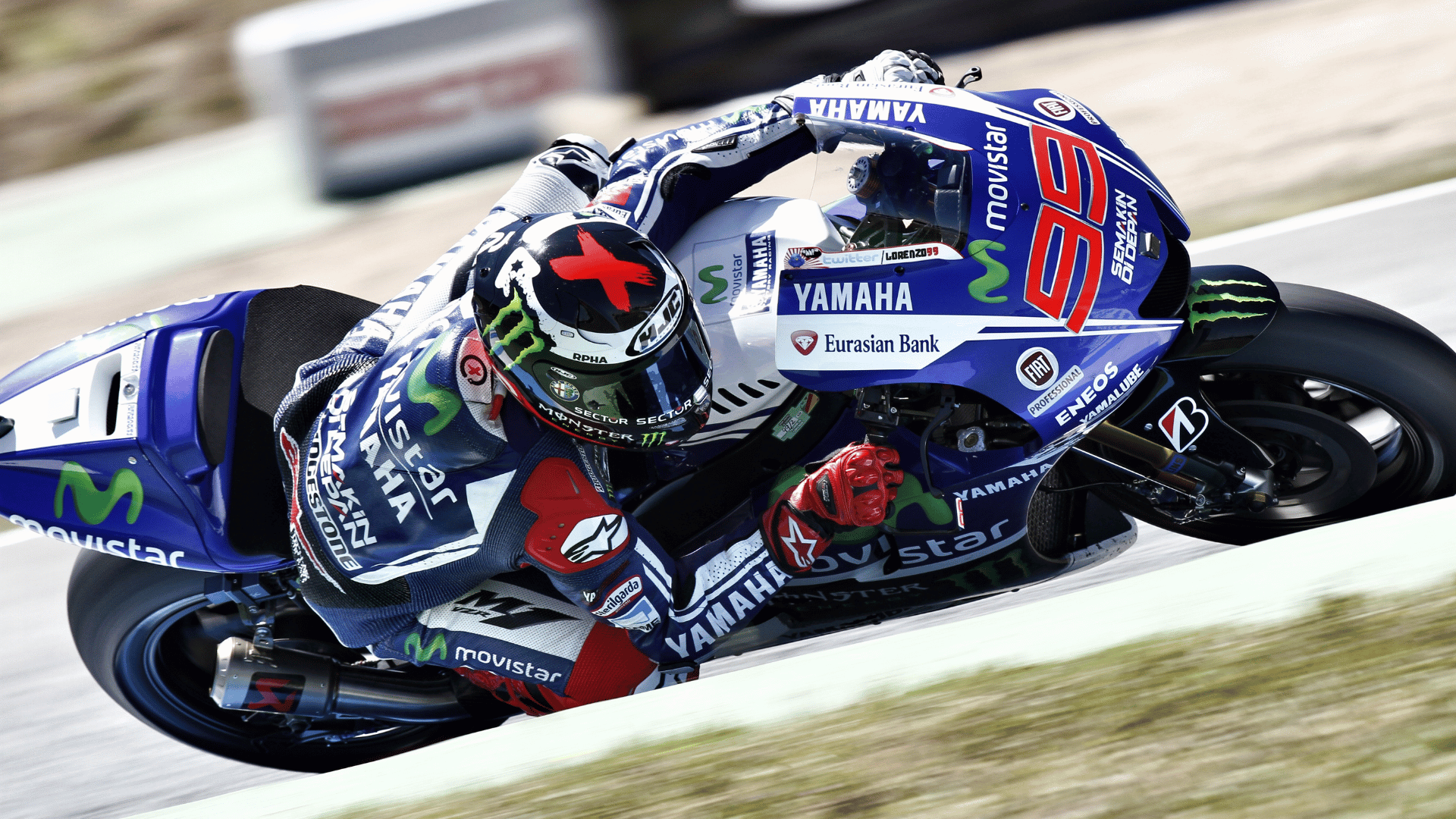
Sponsorship logos on the MotoGP motorcycle of Jorge Lorenzo.

How to ensure maximum sponsorship ROI for your motorcycle brand

Sponsorship logos on the MotoGP motorcycle of Jorge Lorenzo.

How to ensure maximum sponsorship ROI for your motorcycle brand

Sponsorship remains a strong tactic for brands in the motorcycle industry to expand their reach, engage with customers and drive sales. This edition of the Motorcycle Marketing blog delves into some key strategies for ensuring maximum ROI for your motorcycle brand with sponsorship. 

With members of the Motorcycle Marketing team having expertise from working on prestigious events like the Dakar Rally, MotoGP and the WorldSBK World Championship - where sponsorship plays a pivotal role - there's a wealth of knowledge in our crew on how to make the most of these opportunities for your brand.

We also attend all the major European motorcycle industry events each year such as EICMA, Motorcycle Live, ABR Festival, MOTORbeurs Utrecht, Salon de 2 Roues and MaxlRIDE, which together attract hundreds of thousands of riders in person and a huge media presence. Sponsorship and securing brand visibility at these events requires planning and well-considered execution.

Getting your sponsorships right and maximising ROI

One of the most effective ways to quickly gain huge exposure through live events and get a direct line of communication with your target audience is through sponsorship.

Worthwhile sponsorship in the motorcycle industry entails meaningful partnerships that resonate with the target audience and align with a brand's values. Brands sponsoring events, championships, teams or individual riders should look beyond the initial financial commitment in order to maximize their investment. This could involve collaborative advertising and marketing campaigns, exclusive access for fans, co-created content or co-branded merchandise.

Alexandra Puig Rom is an experienced member of the Motorcycle Marketing team who has worked directly with brands at live events to optimize their sponsorship agreements, for example when collaborating with our founder Thalassa van Beek on the PETRONAS Motorsports account at MotoGP races. 

When it comes to maximising sponsorship deals around racing and live events Alexandra states, “Simply placing your company logo on a bike, or a rider’s helmet or leathers provides visibility and awareness to any brand, but there's much more that you can and should do beyond that. First and foremost always add into your sponsorship agreements the option to make content with the riders, team or event that you sponsor. This can be content for social media and also for commercials or campaigns, such as photoshoots with your product.”

The values of those you sponsor should align with your values

Alexandra adds, “Professional riders and teams are familiar faces, everyone knows them or at least your target audience will, so if your brand or product is seen together with them this automatically makes your brand or product a familiar one. This association also happens with values: your chosen rider's values will be transferred to your brand.”

“Ask them to make your product visible, to use it, not only during live competition but also during their free time. It's not only about awareness but also consideration and even conversion. ‘People's subconscious works like this: if this rider uses the product it is good, so I'm going to use it too.’” 

She concludes, “Include in your sponsorship agreement some time with the riders and team principles for your brand's events. Having them at product presentations, exhibitions, or even in a Meet & Greet with stakeholders means having more participation, more visitors or simply just making your stakeholders happy.”

Different sponsorship options around live sport and events

When planning how to gain visibility for your brand there are a plethora of sponsorship and partnership options available to you.

If you’re going to sponsor a rider, some initial research should reveal whether the individual or their management team are easy to work with and even whether they actually like the commercial side of the game. Can you play it smart and pick a rising star, a rider who can grab surprise poles, holeshots, podiums or wins? 

Maybe you want someone whose riding style is particularly spectacular rather than a consistent winner or maybe you want someone whose personality stands out from the crowd. Jack Miller in MotoGP ticks both those boxes. 

Or are you looking for a rider of a specific nationality, in order to gain traction in a defined market? If the U.S. market is key to you, you could pick out a rider such as Garret Gerloff - currently the only American rider on the WorldSBK grid - or Mason Klein, a young Californian who has impressed at the last two editions of the Dakar.

Sponsoring teams and championships

When it comes to working with teams again the opportunities are numerous and know-how is crucial in terms of spotting the right partnerships for your brand. Is a title sponsorship right for you, or are you better off as an official supplier?

Could you strike a deal to sponsor the team in specific championships or key markets? LCR Honda have offered an interesting model in MotoGP for many years, switching up the prominence of their main sponsors depending on the location of their races.

Sponsoring championships rather than teams or individuals can also be advantageous. Working with event organizers such as Dorna, who run MotoGP and WorldSBK, ASO who organize the Dakar, or Infront Moto Racing, who manage the rights of MXGP, may give you the type of global exposure your brand needs and give you access to negotiated racing content. These organisations have dedicated teams to assist their sponsors with activating agreements and achieving maximum reach with their branding.

For manufacturers themselves, their commitment to go racing - and their choices of which riders and team principles to employ - is in itself a huge investment. Their choice of marketing professionals and press officers can also have a big impact on the perception of their brand in racing and the brands that sponsor their teams. Chinese-backed brand Kove have quietly arrived in road racing and have also impressed in recent Dakar performances, though they are yet to make a big splash with European audiences about their racing activities.

Spin-off projects gain further visibility

With the Ténéré Spirit Experience – which Motorcycle Marketing manages the comms of – Yamaha have taken a different approach, allowing them to gain exposure around Rally-Raid racing whilst also taking VIP customers into the heart of the action. This is another step on from sponsorship in terms of gaining exposure with key audience segments.

Yamaha also organize competitions such as the Yamaha R7 Cup and their on-road and off-road bLU cRU series, which help the brand resonate further with customers, create their own action and racing narratives and discover the next generation of racing talent. Red Bull have made a similar investment with the Red Bull MotoGP Rookies Cup over many years and with the various racing series they organize or support.

Smaller brands can start with initial ventures into sponsorship, event organisation and event partnerships in order to create that all important link with both ‘off-line’ and online audiences.

Away from racing it’s also important to understand how the major motorcycle industry events work, which type of customers/riders they attract and how to increase your visibility if you’re sponsoring or exhibiting at those events.

The team at Motorcycle Marketing have the expertise to assist your brand with identifying the right events and championships for your brand to sponsor or to get involved with, depending on your objectives, your target demographic and the products or services you offer.

Measurement and analysis are crucial

Tracking metrics such as social media engagement, website traffic and brand sentiment around sponsorship and racing - or other live events - allows brands to gauge the effectiveness of their efforts and make informed adjustments for future sponsorship initiatives. Companies such as datapowa can help match brands and potential sponsors with sports ‘properties’ in the motorsports industry in order to reach a desired audience and measure the effectiveness of those sponsorships and partnerships over time.

In conclusion, sponsorship in racing and at live events represents an invaluable opportunity for motorcycle brands to elevate their presence, engage with specific rider segments and drive business growth.

If you need help gaining additional visibility for your brand, you can arrange a free consultancy session with the Motorcycle Marketing team to see how we can potentially collaborate and help you achieve your goals.   

Keep on reading...

How Sub-500cc Motorcycles Took Over Europe, The UK And Beyond

How Sub-500cc Motorcycles Took Over Europe, The UK And Beyond Across the globe sales of 300cc-500cc motorcycles have been booming and it’s easy to see why. Light enough to be easy to handle, capable enough to commute on, tour with and hit dirt roads on, they come without the price and weight of big ADVs […]

Motorcycle Advertising Ideas That Actually Drive Sales

Motorcycle Advertising Ideas That Actually Drive Sales What works today when you’re selling bikes, parts, apparel or services? A successful approach to selling B2C logically differs from selling B2B in terms of tone and placement, with the product or service dictating the relevant path of effective campaigns. This guide to the best motorcycle advertising ideas […]

Tsubaki becomes Official Global Supplier of MXGP

Tsubaki becomes Official Global Supplier of MXGP [PRESS RELEASE] Infront Moto Racing and Tsubaki are proud to announce their partnership that sees the Japanese manufacturer of premium motorcycle chains become an official global supplier for MXGP.  Tsubaki has long been familiar with competition, both on and off-road. From race wins to world titles, to Dakar victories and […]

A review of 2023 with Motorcycle Marketing founder Thalassa

2023-12.4 A review of 2023 with Motorcycle Marketing founder Thalassa

A review of 2023 with Motorcycle Marketing founder Thalassa

After another busy year for Motorcycle Marketing in 2023 founder Thalassa van Beek reflects on the progress made by the agency’s growing team of specialist motorbike industry marketers.

Summarising the year as whole, Thalassa explains that she is most pleased with being able to increase the skill set and numbers in the agency’s close group of collaborators. She comments, “The point I’m most excited about this year, just because it’s so important as the base of the company, is that I’m so proud of the team.”

“We have a couple of new people onboard that I’m really pleased about as they are so talented, creative, motivated and just bad-ass bikers. So I think the way we’ve grown together, the way we’re working together, that’s the best part of what happened this year.” 

Thalassa continues, “In addition to that, we signed more high-profile clients this year. At the same time there are some smaller clients we’ve met right at the beginning of their journeys, in their start-up phase, where we see the potential and where both parties are in it for the long-term. It’s rewarding to grow together with this type of client.”

Staying in touch with key industry stakeholders, including manufacturers, brands, suppliers and most importantly, riders themselves, is something that Thalassa and the team here at Motorcycle Marketing always prioritise. Getting to as many industry shows, festivals and gatherings as possible is a must as far as Thalassa is concerned.

“We went to a lot of events in 2023 and it was fantastic to connect with the community, whether that’s with existing clients, potential clients or riders themselves, people like us, and just talk motorbikes all day,” she states.

“We went to Skog in Sweden, Motorbeurs Utrecht in the Netherlands, ABR Festival in the UK, MaxlRIDE in Germany, EICMA in Italy and Motorcycle Live in the UK, plus some of the other team members went to Salon de 2 Roues, Wheels & Waves and Salon Moto Légende in France. There were also members of our team working on World Championship level road and rally-raid races.”

“Every niche has its own events and it’s good to be at those different events, to really be able to get into what’s going on at them.” 

“That is how we differentiate ourselves at Motorcycle Marketing. For a generic agency motorbikes are motorbikes, as long as they have two wheels and an engine that’s it. Whereas we completely specialise and we understand the differences within the motorcycle industry, between the various segments. It’s good for us to not only attend the big shows but also be at niche events to really understand the trends and the feeling amongst the manufacturers and the specific riding community.”

With regard to the growing presence and innovation from the Far East in the European motorcycle market, Thalassa notes, “At EICMA there was a big presence of Chinese brands and it is interesting to see some of those companies seriously upping their game. As a bike lover you have to enjoy that. The more manufacturers that make cool things the better it is.”

As a keen rider herself, Thalassa took her laptop on the road in the spring-summer months, working remotely along the way as she rode north from her base near Barcelona.

“For years it was a dream of mine to ride my bike through Norway, so I took the Ténéré 700 there and it proved to be just the perfect bike for that trip.”

“I went to the south of Sweden for the Skog event and then I did some of the Trans-European Trail and made my way up to North Cape which was fantastic. When I went along the Norwegian coast back south there were some interesting weather challenges! In the south of Norway it was so beautiful, the mountains, the views, the landscapes, it was fantastic. Then I rode back through Germany, the Netherlands, Belgium and France, home to Spain.”

“I did some weekend trips into the Pyrenees, into France and around here in Catalunya. Earlier in the year I also went to Tenerife for a week, riding with one of our team members Leonoor Fischer, where we were invited by Canary Ride. That was a really nice trip.”

In terms of the plans for Motorcycle Marketing in 2024, Thalassa concludes, “The ambition is to keep growing. There’s a lot which is just about to happen. The fact that globally recognised companies are finding us and taking us seriously, with conversations already reaching an advanced stage, is very promising.”

“As for the team, I want to make sure that I keep helping people learn and grow, so that together we get them to places where they can take on more responsibility, with them working on bigger accounts. That’s something I’m really looking forward to in 2024.”

It promises to be another exciting year ahead. If you would like the dynamic Motorcycle Marketing team to help your motorcycle industry brand with reaching your objectives in 2024 feel free to book in a free consultancy session with us.

Keep on reading...

How Sub-500cc Motorcycles Took Over Europe, The UK And Beyond

How Sub-500cc Motorcycles Took Over Europe, The UK And Beyond Across the globe sales of 300cc-500cc motorcycles have been booming and it’s easy to see why. Light enough to be easy to handle, capable enough to commute on, tour with and hit dirt roads on, they come without the price and weight of big ADVs […]

Motorcycle Advertising Ideas That Actually Drive Sales

Motorcycle Advertising Ideas That Actually Drive Sales What works today when you’re selling bikes, parts, apparel or services? A successful approach to selling B2C logically differs from selling B2B in terms of tone and placement, with the product or service dictating the relevant path of effective campaigns. This guide to the best motorcycle advertising ideas […]

Tsubaki becomes Official Global Supplier of MXGP

Tsubaki becomes Official Global Supplier of MXGP [PRESS RELEASE] Infront Moto Racing and Tsubaki are proud to announce their partnership that sees the Japanese manufacturer of premium motorcycle chains become an official global supplier for MXGP.  Tsubaki has long been familiar with competition, both on and off-road. From race wins to world titles, to Dakar victories and […]

What a year!: Key motorcycle industry highlights of 2023

2023-12.3 What a year! Key motorcycle industry highlights of 2023

What a year!: Key motorcycle industry highlights of 2023

It’s been an enthralling year in the motorcycle industry, with bike sales growing in some important markets, with some brands expanding their ranges into new sectors and with some thrilling racing and big moves in the various World Championships.

The Motorcycle Marketing team attended a number of big industry events in 2023 including EICMA in Milan, Motorcycle Live in Birmingham, the ABR Festival in Warwickshire, MOTORbeurs in Utrecht and MaxlRIDE in Bavaria, along with thousands of other riders. 

The events were all packed and we sensed a big buzz throughout the industry everywhere we went this year. The numbers back up that feeling, with over 90,000 attendees enjoying Motorcycle Live over nine days at the NEC and with EICMA attracting more than 560,000 people, the highest figure in the history of the event

Rising sales in many important markets

In addition to that there have been clear signs of the booming motorcycle industry, with European sales of bikes increasing in 2023. According to the European Association of Motorcycle Manufacturers (ACEM) from January to September 2023, a total of 873,985 new motorcycles were registered in the key markets of France, Germany, Italy, Spain and the UK, which was an 11.3% increase compared with the same period of 2022.

Ducati, BMW, Piaggio, and Honda were all reporting increasing sales in 2023 according to autoweek.com, with ‘some hitting record-breaking unit sales and revenue numbers’ in various international markets.

Earlier this year right here on the Motorcycle Marketing blog we considered how the sales of motorcycles are promoted in racing with the philosophy of win on Sunday, sell on Monday.

More success on track for Ducati

Indeed, the biggest news of the year from the race track was Marc Marquez announcing he was leaving Repsol Honda after 11 seasons with the team in the premier MotoGP class, which saw him win the title six times. 

The 30 year-old Spanish star will ride a Ducati Desmosedici for the Gresini Racing team in 2024 as he looks to recapture the World Championship for the first time since 2019. The Desmosedici was put to good use in 2023 by Pecco Bagnaia as the Italian successfully defended his MotoGP title. Ducati Corse’s success in racing is integral to the brand’s image and growth.

Ducati were also busy in the MotoE class in 2023 providing the machinery for the electric class of World Championship racing and they will continue to supply those bikes through to 2026.  

MotoGP in Asia and a Chinese team in WorldSBK

MotoGP also visited India for the first time in 2023, with Grand Prix motorcycle racing visiting six different Asian countries this year. Continuing the eastern theme 2023 also saw the arrival of Kove in road racing, as the brand made history as the first Chinese manufacturer to participate in WorldSBK with their Kove 321RR running in the WorldSSP300 class.

It was a learning year for Kove with their China Racing Team effort, building on the racing experience they have gained by already racing in the Dakar Rally. 

More big name rider moves

Elsewhere in the WorldSBK paddock there were big headlines as it was announced that six-time World Champion Jonathan Rea would leave Kawasaki after several years of success together, with Rea set to ride a Yamaha YZF R1 in 2024

Also on the move is Toprak Razgatlioglu as the charismatic and brilliantly talented Turk departs from Yamaha to race for BMW next season.The Motorcycle Marketing team will be watching attentively in 2024 as the German brand look to maximise the arrival of Razgatlioglu with their on and off track activity. 

Razgatlioglu rode superbly throughout 2023, taking the title down to the final weekend of the season at Jerez, but ultimately unable to stop Alvaro Bautista winning the title for the second successive season. 

Bautista was so good in 2023, with a total of 27 victories and breaking multiple records along the way. His dominance was probably a key factor in the WorldSBK rule changes for 2024 to bring in a minimum bike + rider weight to create closer racing, which means that Bautista is likely to have around 7kg of ballast added to his Ducati Panigale V4R in 2024. 

Ducati are now dominant in road racing and rival manufacturers will therefore be watching closely as the Bologna-based brand make the move into the off-road scene. The Red from Borgo Panigale Enters Motocross, stated the bold announcement in October. 

Former Yamaha and KTM rider and nine-time MX World Champion Antonio Cairoli will join Ducati as high-performance test rider for the new racing program’

Meanwhile, Triumph’s progress with their dirt bike continues with Ricky Carmichael at the helm of the Triumph TF 250-X’s development

Can Ducati and Triumph challenge the off-road big guns such as the KTM brands and the Japanese giants in the years ahead? It will certainly be interesting to see, after KTM-owned Gas Gas enjoyed success with Jorge Prado’s 2023 MXGP championship win and with the Red Bull KTM Factory Team winning the ‘23 Dakar Bikes title with Kevin Benavides.

KTM have dominated the Dakar for more than 20 years and Benavides will attempt to defend his title in the 2024 rally, which takes place in Saudi Arabia in January.

Away from the sand dunes there were also big plaudits for KTM earlier in the year when Rider magazine announced the KTM 1290 Super Duke GT as its 2023 Motorcycle of the Year.

The Triumph Street Triple 765 RS, meanwhile, was Overall Bike of the Year for 2023 for Motorcycle News, whilst MCN also deep dived on an intriguing Great British bike-off as they compared the Triumph Bonneville T100 directly with its competitor models - namely the BSA Gold Star and the Norton Commando 961 SP.

Indeed, for the Motorcycle Marketing team one of our highlights of the year was seeing the construction of the Commando and the stunning V4SV ‘588’ up close, as we had the privilege of visiting the Norton factory in Birmingham.

The company have an incredible 125-year history behind them and under the ownership of TVS Motor Company - who also build bikes for BMW - Norton’s fascinating revival is a story we’ll also be following closely in 2024 and beyond.

As you can see, there are plenty of highlights to look back on while we’re wrapping up this year and we can’t wait to see what 2024 has in store for the industry. If you’re looking to take big steps with your brand next year, make sure to get in contact for support in your marketing efforts.

Keep on reading...

How Sub-500cc Motorcycles Took Over Europe, The UK And Beyond

How Sub-500cc Motorcycles Took Over Europe, The UK And Beyond Across the globe sales of 300cc-500cc motorcycles have been booming and it’s easy to see why. Light enough to be easy to handle, capable enough to commute on, tour with and hit dirt roads on, they come without the price and weight of big ADVs […]

Motorcycle Advertising Ideas That Actually Drive Sales

Motorcycle Advertising Ideas That Actually Drive Sales What works today when you’re selling bikes, parts, apparel or services? A successful approach to selling B2C logically differs from selling B2B in terms of tone and placement, with the product or service dictating the relevant path of effective campaigns. This guide to the best motorcycle advertising ideas […]

Tsubaki becomes Official Global Supplier of MXGP

Tsubaki becomes Official Global Supplier of MXGP [PRESS RELEASE] Infront Moto Racing and Tsubaki are proud to announce their partnership that sees the Japanese manufacturer of premium motorcycle chains become an official global supplier for MXGP.  Tsubaki has long been familiar with competition, both on and off-road. From race wins to world titles, to Dakar victories and […]