Content Marketing

How to stay on top of SEO in the AI era of 2026
How to stay on top of SEO in the AI era of 2026

How to stay on top of SEO in the AI era of 2026

The way consumers search for information online is being revolutionized in the era of AI answer engines and LLMs (Large Language Models), but what does that mean for marketing professionals in the motorcycle industry? Essentially, ranking highly and winning search traffic is still crucial for generating qualified website views, however in 2026 the techniques for doing so continue to evolve. Brands that rank well in AI generated responses/summaries to search queries on Google are also cited prominently in LLMs such as ChatGPT, Gemini and Claude. We're here to bring you the latest insights and best practices.

How To Stay On Top In Search AND On AI Platforms

So how do you stay on top in terms of search engine optimization AND at the same time ensure that the AI engines and LLMs give visibility to your brand, service or product, as opposed to those of your competitors?

The answer is a combination of onsite optimization – which should now begin to focus more on what answer engines and LLMs want – and off-site tactics, such as brand building, influencer marketing and PR, to ensure that your brand is cited and rated highly by media, content creators, AI tools and - most importantly - riders themselves.

In many ways the work of the marketer in the motorcycle industry remains similar to what it was five or 10 years ago. The core skills and tactics have barely changed, but in the rapidly evolving AI era it is vital to understand why we are doing the work we do, to understand where our successful efforts will pay off and to measure the impact of our marketing activity.

SEO Is Changing Fast: Answer-Engine Visibility Explained

Over recent years and continuing through 2026, SEO is shifting, with the goal now not simply being to rank on page one of Google, but to be quoted in answers from tools such as ChatGPT, Gemini and Google AI Overviews. SEO is now evolving to include AEO (Answer Engine Optimisation), not just search ranking.

Instead of just presenting ten blue links (as Google’s organic search results still do – but often down the page below ads and AI summaries) these systems summarise information from several trusted websites into general responses.

Those can be displayed at the top of a Google search result page in one AI summary or as an answer to a user’s question inside an LLM like ChatGPT.

For example, when a rider asks, “What are the best A2 adventure bikes?”, AI search or AI assistants can generate shortlists including the Honda NX500, KTM 390 Adventure, BMW G 310 GS, Benelli TRK 502 and CFMOTO 450MT, by pulling in structured insights from multiple sources.

Those sources can include dealership pages, motorcycle media sites, customer reviews and manufacturer specs. If your dealership blog explains ‘Why the NX500 suits both commuters and weekend adventurers’, your content can become part of that answer.

For motorcycle brands, this means success is no longer just ranking for keywords such as “A2 adventure bike” or “best 250cc dirtbike”.

Instead, it’s about publishing clear, structured, expert content on your own website – and encouraging bloggers, media, influencers and other industry stakeholders to do the same on their platforms – which AI systems trust enough to cite.

Quick SEO And AEO Wins For Motorcycle Brand Websites

Digital marketers working in the motorcycle sector can quickly improve SEO and AEO visibility with specific high-impact updates to their website.

Well defined ‘schema’ (structured website data helping search and answer engines classify content) helps AI platforms to understand your business, services, events and products.

For example:

  • Dealership/service schema (“Official Ducati dealer Madrid service center”)
  • Event schema (“Sunday ride-out starting at John’s Café in Marple”)
  • Product schema (“Triumph Scrambler 400 X specs and price”)

Adding clear data (in terms of meta titles, meta descriptions, page titles, sub-headers, clean URLs, good editorial content on-page) increases chances of appearing in AI summaries and local search panels. In more traditional SEO, this would be referred to as ‘Onsite SEO’ and it is still as relevant as ever.

Improve Internal Linking Between Related Content

A clean and logical internal linking policy has long been important in SEO and that continues to be the case in the era of AEO and LLMs.

A well-described hyperlink to another relevant page from an already well structured and logically written page helps search engines to crawl, read and rank websites efficiently. AI systems interpret these links as topical authority.

For good examples in practice, take a look this MotoGP.com article on How MotoGP riders avoid crashes and observe how it logically links to other articles on the same site on topics such as ‘What Safety Gear and Techniques Do MotoGP™ Riders Use?’ and ‘How Does the Flag System Work in MotoGP™?’

Meanwhile this in-depth article on MotoGP Black Friday deals provides well classified links to seasonal discount pages where fans can purchase MotoGP merchandise, tickets and video subscriptions.

The Importance Of Strong Blog Content

Creating in-depth articles on specific topics and updating older blog content for topics you know riders and consumers are searching for is a tried and tested method for ranking well in traditional SEO. It remains just as important in the age of AI generated answers and LLM-driven search.

Ask ChatGPT ‘Who are the best motorcycle marketing agencies in Europe?’ and as you can see, our agency here at Motorcycle Marketing is the first one mentioned in the response, with a link directly to our website.
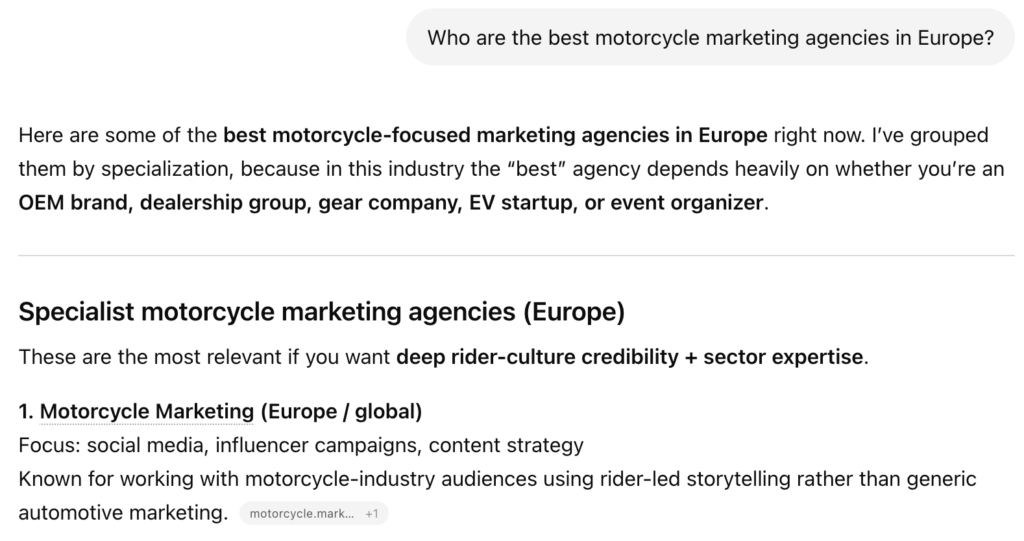
ChatGPT cites Motorcycle Marketing as Europe’s top industry agency.

That result is due to the quality of our website in describing our services, including our blog articles which deep dive into relevant topics for marketers in our industry.  

Examples of blog topics could be as follows – depending on the service or product behind your blog:

  • Route guides (‘Best motorcycle routes near Valencia’)
  • Technical / maintenance guides (‘How to clean your motorbike chain properly’)
  • Gear explainers (‘How to choose adventure tyres’)
  • Launch coverage (‘Royal Enfield Himalayan 450 review’)

Bennetts Insurance – a UK based specialist motorcycle insurance company – do this well, providing helpful information for riders on topics as varied as ‘2026 World Superbikes Calendar and TV Schedules’, ‘Monthly UK motorcycle theft reports’ and a plethora of motorcycle model reviews.

Updating articles regularly, including with timestamps to show publication dates, improves trust signals for search engines, answer engines and end users (your future customers!).

Add FAQ Sections Answering Real Rider Questions

AI tools frequently extract answers directly from FAQ (frequently asked questions) blocks, making them one of the easiest visibility wins in 2026.

An example FAQ section or block at the end of a blog page could look like this:

  • What are the best methods to prevent my motorcycle being stolen?
  • What does a typical motorcycle insurance policy cover?
  • If I damaged another rider’s motorcycle in a crash, am I covered?
  • Why do motorcycle riders legally require insurance?
  • Is insuring a motorcycle expensive in the US?
  • Can I insure my riding gear as well as my bike?
  • Are there specialist insurance policies for motocross?

Take a look at the FAQs in the footer of this article for another clear example of how to do this well.

SEO + AEO + Social Media Should Work Together

LLMs evaluate brand presence across platforms, not just websites. So Facebook, Instagram, and YouTube content and mentions on forums strengthen authority signals for SEO and AEO.

On your own social media channels and via the work you do with content creators and influencers to promote your brand - which can also often be picked up by third party media – the quality of the content and the clarity of the messaging should inspire confidence in your audience, followers and potential customers.

For example, if you launch a new product you would publish relevant launch material across your own channels (including social), encourage ambassadors and creators to test and review your products on their social media accounts at a launch event and then provide as much relevant material from the launch event to media.

The coverage achieved on third party sites will serve the traditional brand building and trust building purposes, whilst also making your brand visible to LLMs and generative AI platforms.

Importance Of Customer Reviews In 2026

As well as being an important SEO ranking factor, AI systems increasingly use listings and customer reviews to answer user queries.

Ensuring that you generate and inspire positive reviews on platforms such as Google Reviews, Trust Pilot and Yelp – whether you are a service or product-based business, remains vitally important in 2026.

For a local motorcycle service center, customer reviews now influence far more than just reputation, they directly affect whether your workshop appears inside AI-generated answers to queries such as: ‘Best motorcycle service center near me’ or ‘Ducati service specialist with good reviews’.

ChatGPT recommending motorcycle service centers in Barcelona.

Tools like ChatGPT, Gemini, Claude and Google AI Overviews increasingly analyze review sentiment, star ratings, service keywords and consistency across platforms when recommending businesses.

Conclusion: Strong SEO Now Equals Visibility Inside AI Answer Engines

By following the best practice tips above for a solid SEO strategy you should also tick all the relevant boxes to ensure your brand and website perform well at AEO. Your goal is to be a trusted cited source, not only to rank your site in the top search engine position.

AI tools rely on live web results to generate answers and sites with strong SEO foundations are more likely to be surfaced by generative AI platforms. This can be achieved by writing in an authoritative tone, having a clear structure to your content, displaying strong brand signals and by employing the tactics we have covered in detail above. 

From SEO and website content to social media strategy, PR, influencer marketing and content creation, here at Motorcycle Marketing we work with motorcycle businesses across the industry to ensure they stay visible—not just on Google, but inside AI generated answers and recommendation engines too. If you’d like support future proofing your online presence, get in touch to discuss how we can help your brand grow in the AI era.

Is organic search traffic dropping due to AI summaries?

Yes, there are now multiple credible studies (2025–2026) showing measurable declines in organic click-through rates and traffic due to AI search features like Google AI Overviews, Gemini responses and LLM-style summaries. Ahrefs found AI Overviews reduced CTR for the top ranking page by 58%.

Is Google losing market share due to ChatGPT?

AI search is not replacing Google yet, but it’s already large enough to warrant materially updating your marketing strategy. ChatGPT sessions now represent roughly 20% of total global search-related traffic, making it the second-largest discovery platform after Google. Likewise, Google’s share of total information discovery (search + AI combined) fell from 89.3% to 57.6% between 2022 and 2025.

What are the main AI assistants and generative AI platforms where motorcycle brands should look to be cited?

 Open AI’s ChatGPT, Google Gemini, Microsoft Copilot, Anthropic’s Claude, Perplexity AI, Meta AI and xAI’s Grok.

Can marketers pay to get their brand promoted via ChatGPT?

Eventually they will be able to yes, as advertising on ChatGPT is emerging but limited in 2026 still. OpenAI has begun testing clearly labeled sponsored placements for some users on lower-tier plans, but advertisers cannot influence answers directly. For now, brands gain visibility mainly through strong SEO, authoritative content and structured data that LLMs can reference organically rather than traditional paid ads.

Keep on reading...
How to stay on top of SEO in the AI era of 2026

How to stay on top of SEO in the AI era of 2026 The way consumers search for information online is being revolutionized in the era of AI answer engines and LLMs (Large Language Models), but what does that mean for marketing professionals in the motorcycle industry? Essentially, ranking highly and winning search traffic is […]
How to Successfully Promote Local Motorcycle Events

How to Successfully Promote Local Motorcycle Events From café meet-ups and ride-outs to dealership open days and demo events, local motorcycle gatherings are at the heart of the riding community. In this blog, we’ll show you how to promote motorcycle events effectively, using a mix of digital and offline tactics to reach the right riders […]
How Sub-500cc Motorcycles Took Over Europe, The UK And Beyond

How Sub-500cc Motorcycles Took Over Europe, The UK And Beyond Across the globe sales of 300cc-500cc motorcycles have been booming and it’s easy to see why. Light enough to be easy to handle, capable enough to commute on, tour with and hit dirt roads on, they come without the price and weight of big ADVs […]

How to Use User-Generated Content to Fuel Your Motorcycle Brand

2026-02 | How to Use User-Generated Content to Fuel Your Motorcycle Brand

How to Use User-Generated Content to Fuel Your Motorcycle Brand

There’s no marketing quite as powerful as a fellow rider showing off their bike, their gear, or their latest trip—and tagging your brand while doing it. That’s the magic of user-generated content (UGC), and in the motorcycle world, it’s a goldmine. From road trip photos to workshop installs and candid reviews, user-generated content helps you connect with your audience in a way that’s authentic, engaging, and cost-effective. But to make the most of it, you need more than a simple repost. You need a strategy.

In this blog, we’ll dive into what UGC really is, why it works so well in our industry, and how to get, assess, and use it effectively.

What Is User-Generated Content?

User-generated content is any piece of content—photo, video, review, social media post, blog article, etc.—created by someone outside of your brand. In our world, that usually means a rider who’s bought your product, visited your shop, or taken part in your tour. UGC might come in the form of:

  • Instagram posts tagging your gear
  • A TikTok video showing a recent helmet unboxing
  • Google or Facebook reviews from happy customers
  • A YouTube vlog of a rider using your parts on a weekend trip
  • Forum posts discussing your services

The key? It wasn’t created by your brand. It’s real, unsolicited (or lightly encouraged), and often full of genuine enthusiasm.

Why UGC Is Especially Valuable in the Motorcycle Industry

Motorcycling is a lifestyle. Riders don’t just buy a product—they use it, test it, rely on it, and often talk about it. That means content is being created all the time by your audience. That carries weight; UGC builds trust. It shows how your products or services are used in the real world. It taps into the sense of community that defines motorcycling, and it removes the overly polished filter that many branded posts have.

Even better? It’s highly cost-effective. With permission and a proper content strategy, UGC can become a core part of your marketing without the need for huge production budgets.

How to Encourage User-Generated Content

While some UGC happens organically, there are many ways to gently guide your audience toward creating and sharing more:

Create branded hashtags.
Make it easy for people to tag their content. Hashtags like #RevitRider or Yamaha Ténéré’s #NextHorizon help you find and follow what people are posting.

Ask for it.
Don’t be shy; your newsletter, product packaging, social captions or website can include a simple message like: “Tag us in your ride photos to get featured!”

Run UGC campaigns or contests.
Want to drive a wave of content creation? Host a giveaway or photo challenge. Just make sure the rules are clear and the prizes are relevant.

Collaborate with your ambassadors.
Your existing partners, ambassadors or influencers are already familiar with your brand voice. Encourage them to invite their own audience to participate.

Reward community engagement.
Even a simple shoutout or repost can go a long way in encouraging future contributions.

Is the Content Good Enough to Use?

Not all UGC is created equal. Before reposting or resharing, ask yourself:

  • Does it reflect your brand values?
  • Is the quality good enough for the platform you’re using? (Instagram Feed vs. Stories, for instance)
  • Is the tone right—positive, enthusiastic, respectful?
  • Are there any red flags, such as dangerous riding, inappropriate language, or competitor branding in the shot?

If in doubt, consider resharing it only in more casual formats (like Stories) or using it as inspiration for future campaigns. And of course, always ask for permission before reposting. Even if someone tags you, it’s best practice to message them first and get explicit approval.

How to Use UGC in Your Marketing

Once you’ve gathered great UGC, put it to work across different channels:

Social Media
This is where UGC shines. Reposts, Stories, carousels, Reels—there’s no shortage of formats where community content fits. Add a caption that tells people why you love the post, or highlight the rider behind it.

Website
UGC builds trust when visitors are considering a purchase or booking. Showcase customer photos on product pages, include testimonials on your homepage, or add a gallery of riders using your gear.

Email Newsletters
Feature a “Rider of the Month” or share your favourite community posts. It adds variety to your content and strengthens the bond with your audience.

Blog Posts
Turn a collection of user stories into a blog about “How real riders use our .” Or ask permission to interview a customer about their trip using your service.

Ads
With consent, UGC can make for powerful, authentic ad content. Real riders, real stories—it beats stock photos any day.

Final Thoughts

User-generated content isn’t just a marketing trend—it’s a reflection of the community you’ve built. And in motorcycling, that community is everything.

By encouraging, curating, and showcasing UGC thoughtfully, you’re not just filling your content calendar—you’re giving your riders a voice and strengthening the bond between your brand and the people who love it.

So the next time a rider tags your shop, service, or product, take a moment to reply—and maybe even repost. It might just be the most powerful marketing you do all week.

If you’re not sure where to start with your UGC strategy, or want help building a content plan that works, we’re here for you. Get in touch to chat about how Motorcycle Marketing can support your brand with smart, rider-focused content that actually gets results.

Keep on reading...

How to stay on top of SEO in the AI era of 2026

How to stay on top of SEO in the AI era of 2026 The way consumers search for information online is being revolutionized in the era of AI answer engines and LLMs (Large Language Models), but what does that mean for marketing professionals in the motorcycle industry? Essentially, ranking highly and winning search traffic is […]

How to Successfully Promote Local Motorcycle Events

How to Successfully Promote Local Motorcycle Events From café meet-ups and ride-outs to dealership open days and demo events, local motorcycle gatherings are at the heart of the riding community. In this blog, we’ll show you how to promote motorcycle events effectively, using a mix of digital and offline tactics to reach the right riders […]

How Sub-500cc Motorcycles Took Over Europe, The UK And Beyond

How Sub-500cc Motorcycles Took Over Europe, The UK And Beyond Across the globe sales of 300cc-500cc motorcycles have been booming and it’s easy to see why. Light enough to be easy to handle, capable enough to commute on, tour with and hit dirt roads on, they come without the price and weight of big ADVs […]
How to Build a Content Calendar for Your Motorcycle Brand

2025-11 | How to Build a Content Calendar for Your Motorcycle Brand

How to Build a Content Calendar for Your Motorcycle Brand

When you think of marketing your motorcycle business, “content calendar” probably doesn’t spark the same excitement as, say, launching a new product or attending a big event. But here’s the truth: behind every consistent, well-performing motorcycle brand is a well-structured plan. And it doesn’t need to kill your spontaneity or creativity. A content calendar is a tool that frees up mental space, allows your ideas to breathe, and ensures your audience always hears from you, without last-minute panic.

In this blog, we’ll explore what a content calendar really is (and isn’t), why it’s especially helpful in the motorcycle industry, and how to build one that helps you show up with purpose—week after week, month after month. If you’re a dealership, we’ve also got a downloadable 2026 Content Calendar Guide made just for you.

What Is a Content Calendar (And Why It’s Worth It)?

A content calendar is more than just a schedule. It’s your content strategy made visible and actionable. It maps out what you’re going to say, when and where you’re going to say it, and how that supports your business goals.

It can be a shared Google Sheet, a Trello board, or a professional scheduling platform. It’s not the tool that matters, but how you use it. Done well, your calendar helps you:

  • Stay consistent (even when you’re busy)

  • Align marketing with real-world events and product launches

  • Balance your messaging (so it’s not all “buy now” content)

  • Save time and avoid last-minute scrambling

And while many brands start thinking about content calendars ahead of a new year, this approach is valuable year-round—whether you’re planning for next month or next season.

Why Motorcycle Brands Should Use a Content Calendar

Motorcycling is a seasonal industry. And seasonal industries need strong planning.

Whether you’re running a gear brand, a tour company, or a local workshop, your customers’ needs change throughout the year. That means your marketing should shift too.

A dealership might want to promote battery tenders and workshop services in January, new bikes in March, and travel accessories in June. An adventure tour company may plan campaigns around booking seasons and weather windows. A gear brand could build anticipation around a spring/summer launch.

If you know what your audience needs at each stage, and you’re prepared in advance, you can show up with relevance instead of rushed content that misses the mark.

Another benefit? Consistency builds trust. When your brand shows up regularly with value—whether that’s tips, updates, community features, or offers—people begin to expect and appreciate it. That’s how long-term relationships start.

How to Create a Content Calendar That Works

Let’s walk through the process of creating a content calendar that’s actually useful—one you’ll want to keep using.

Start with a Content Audit

Before you look ahead, take a quick look back. What content worked well this year? Which blog posts brought in traffic? Which Instagram posts got people talking? What email had the highest click-through rate?

You don’t need to overanalyse, but learning from your own history helps shape smarter decisions moving forward.

Map Out the Big Moments

List key business milestones and external events you want to align with:

  • New product launches

  • Peak riding seasons

  • Industry events (like EICMA, local open days, etc.)

  • National holidays or sales opportunities

  • Off-season periods where you’ll need creative engagement

Don’t forget to include your internal schedule too. Are you short-staffed in January? Planning time off in summer? Block those out now so your content doesn’t fall flat when you’re away.

Choose Your Channels and Formats

Are you active on Instagram, Facebook, or TikTok? Do you send newsletters or write blog posts? Rather than doing everything, identify the formats that actually reach your audience and work for your business.

For example:

  • Use Instagram for daily engagement, Reels for reach, and Stories for behind-the-scenes

  • Use newsletters to promote events, share helpful content, and drive sales

  • Use your blog to build SEO and create content that’s easy to repurpose

Make sure your calendar reflects the formats you actually want to maintain.

Assign Monthly (or Weekly) Focus

Create a loose structure: January = winter prep tips. March = gear up for spring. August = late-summer adventures. November = holiday gift ideas.

This helps you keep a rhythm while still allowing flexibility for spontaneous posts, team updates, or trending topics.

Keep It Collaborative and Realistic

If you have a team, keep the calendar in a place everyone can access. Assign who’s responsible for what, and use the calendar to prevent bottlenecks.

And most importantly: don’t over-plan. If you’re a one-person business, don’t set yourself up for daily posts across five platforms. A sustainable plan beats a perfect one.

For Dealerships: Our 2026 Content Calendar Guide

Running a motorcycle dealership means juggling a lot; product sales, workshop bookings, customer questions, and seasonal demand. Your time is valuable, and marketing shouldn’t be an afterthought.

That’s why we created the 2026 Content Calendar Guide for Motorcycle Dealerships. It’s designed specifically for shops like yours that offer both products and workshop services. Inside, you’ll find:

  • Blog post ideas to boost your SEO and connect with your local riding community
  • Social media prompts tailored to key seasons, services, and product launches
  • Newsletter suggestions to keep your audience engaged and coming back

Think of it as your year-round marketing sidekick. With monthly themes, ready-to-use ideas, and inspiration for every season, it gives you a clear plan without the overwhelm.

This guide helps you show up consistently, stay relevant, and build lasting connections with your customers without spending hours figuring out what to post.

Set yourself up for success, free up your time, and focus on what you do best.

Working in a different niche within our industry? Let us know, and we’ll reach out once we’ve got a version tailored to your brand’s needs. 

Final Thoughts

Planning your content doesn’t mean locking yourself into a rigid plan—it’s about setting your marketing up for success. A good calendar gives you a framework to be consistent, relevant, and intentional.

And the best part? Once you’re ahead, you’ll actually have the time and headspace to make better content, respond to your audience, and enjoy the creative process.

So whether you’re setting goals for next year or simply want to stay on top of things starting this week, your calendar is your most underrated tool.

Need help? If you don’t have the time or capacity to plan and create your content calendar, we’d be happy to support you. Get in touch to chat through what you need.

Keep on reading...

How to stay on top of SEO in the AI era of 2026

How to stay on top of SEO in the AI era of 2026 The way consumers search for information online is being revolutionized in the era of AI answer engines and LLMs (Large Language Models), but what does that mean for marketing professionals in the motorcycle industry? Essentially, ranking highly and winning search traffic is […]

How to Successfully Promote Local Motorcycle Events

How to Successfully Promote Local Motorcycle Events From café meet-ups and ride-outs to dealership open days and demo events, local motorcycle gatherings are at the heart of the riding community. In this blog, we’ll show you how to promote motorcycle events effectively, using a mix of digital and offline tactics to reach the right riders […]

How Sub-500cc Motorcycles Took Over Europe, The UK And Beyond

How Sub-500cc Motorcycles Took Over Europe, The UK And Beyond Across the globe sales of 300cc-500cc motorcycles have been booming and it’s easy to see why. Light enough to be easy to handle, capable enough to commute on, tour with and hit dirt roads on, they come without the price and weight of big ADVs […]
Marketing Checklist for Launching Your Motorcycle Business

2025-10 | Marketing Checklist for Launching Your Motorcycle Business

Marketing Checklist for Launching Your Motorcycle Business

Starting a new motorcycle business is exciting—but launching without a marketing plan is like riding without a map. Whether you're opening a new gear store, launching a motorcycle tour company, or starting a custom workshop, the success of your motorcycle business launch depends not just on your passion or products, but on how well you communicate them.

This blog is your marketing roadmap: practical, down-to-earth, and tailored for motorcycle entrepreneurs ready to make a strong first impression.

Define Your Brand Early

Before printing flyers or posting on Instagram, get clear on what your business stands for. What makes you different from the shop down the street or the dozen other accounts online? Defining your brand includes your name, logo, tone of voice, and core message—but also your values, audience, and style. Are you premium or budget? Rugged or refined? Fun and cheeky, or technical and serious? Every decision you make from here should align with that identity.

Build Your Digital Foundation

Even if you're not launching with a full website, set up your digital basics early. Secure your domain name and create at least a simple landing page with your contact details and "coming soon" messaging. Set up your business profiles on Google, Facebook, and Instagram. If you're offering local services, this step is especially important for discoverability.

Also, set up a basic email marketing tool like MailerLite or Mailchimp so you can start collecting email addresses from day one.

Create a Content Plan Before Launch

Don't wait until launch day to post your first photo. Start building interest weeks in advance with content that introduces you, your brand story, and your "why."

Document the setup process—from fitting out the workshop to unpacking gear. Tease new arrivals, showcase behind-the-scenes moments, and share countdowns. This creates early momentum and gives your future customers something to connect with.

Build an Audience Ahead of Launch

Create a "coming soon" sign-up page on your site with a small incentive: early access, a discount code, or a giveaway. Use this to start building your email list.

On social media, introduce yourself with short videos or photos and ask your community to follow along. Even if you only post once or twice a week, do it consistently. You’re not just building an audience—you’re laying the foundation of a community.

Collaborate With Others

Reach out to other small businesses, creators, or even local riders for partnerships. Could you team up with a local coffee shop for a launch party? Could an influencer help you get the word out?

Early collaborations expand your reach and add credibility. It’s also a great way to strengthen your brand’s ties to the wider motorcycle community.

Set Up Tracking and Feedback Loops

Even in the early days, data matters. Set up Google Analytics and the Meta Pixel so you can track who’s visiting your website and what they’re doing there. It’ll help you make smarter decisions later.

Also plan how you’ll collect feedback. Ask early customers what they loved and what could be better. Run quick Instagram polls or follow up with a short email survey. These insights are gold.

Plan Your Launch Campaign

Pick a launch date and work backwards. Outline what you want to share each week leading up to the big day. This could include sneak peeks, giveaways, brand story highlights, or behind-the-scenes content.

Create a simple content calendar so you’re not scrambling at the last minute. Use scheduling tools like Meta Business Suite or Later to prepare your posts ahead of time and take pressure off launch week.

Final Thoughts

Launching a motorcycle business is a big move, but your marketing doesn’t have to be overwhelming. Focus on consistency, community, and clarity. Start small but intentional.

And remember: you don’t have to do it alone.

Want help launching your motorcycle brand with confidence? At Motorcycle Marketing, we support businesses of all sizes with strategy, content, and long-term brand growth. Contact us now to get started.

Keep on reading...

How manufacturers use racing to sell bikes – and how effective is it?

How manufacturers use racing to sell bikes – and how effective is it? For several decades, motorcycle manufacturers have used the adrenaline and glamour of elite level racing to increase their visibility and boost sales. The philosophy of ‘win on Sunday, sell on Monday’ has been ingrained in the industry for many years, emphasising the […]

EMX Powertrain writes history in FIM E-Xplorer World Cup

EMX Powertrain writes history in FIM E-Xplorer World Cup [PRESS RELEASE] The launch of the FIM E-Xplorer World Cup has created a new class in which electric all terrain motorcycles compete against each other in a championship format. The World Cup consists of 5 events, run on different terrains. At the opening round in Barcelona, […]

Introducing Hitchcox Motorcycles: born from a career in Formula 1 Engineering

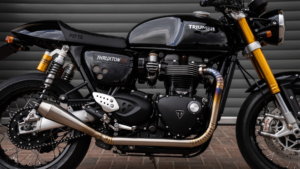
Introducing Hitchcox Motorcycles: born from a career in Formula 1 Engineering [PRESS RELEASE] Born from a decade of experience in Formula 1 and the love for riding classic inspired motorcycles with a tune to match, we are proud to introduce the Hitchcox Motorcycles brand with a full lineup of exhaust options for all Triumph’s from […]

Planning Your Winter Motorcycle Marketing Strategies

motorcycle on road with winter sunset

Planning Your Winter Motorcycle Marketing Strategies

It might still feel like prime riding season, but now is the perfect time to start planning your winter content strategy. When the bikes go into storage and the temperatures drop, rider behaviour changes—and so should your marketing. In this blog, we’ll explore how to keep your brand relevant, support sales, and stay connected with your audience during the quieter season.

Keep Riders Engaged When They’re Off the Bike

Just because people ride less in winter doesn’t mean they stop caring about motorcycles. Your content should reflect the shift in their behaviour. When riders aren’t out on the road, they have more time to read, watch, learn, and dream. Focus on content that fuels their passion and keeps your brand top of mind.

Think winter maintenance tips, gear guides, travel inspiration for 2026, and rider interviews. These types of content keep your audience engaged until the next riding season.

If you have a physical location, it’s also a great time to host in-person events and meetups. While it might not be ideal for ride-outs, consider inviting your audience to a maintenance workshop, a talk from a world traveler, or a mini expo showcasing new 2026 collections. These events give your community a reason to connect and interact with your brand—even off the bike.

Drive Sales During the Off-Season

Even when riders aren’t buying bikes or planning trips, they’re still shopping—especially in the run-up to the holidays. Black Friday, Cyber Monday, and Christmas are big opportunities for smart campaigns.

Use your content to highlight what makes your products or services great gift material. Create guides tailored to different types of riders or budgets. Promote gift cards, limited-edition bundles, and even last-minute delivery options for the procrastinators.

If you sell gear, parts, accessories, or experiences, this is the time to put them front and centre. Combine product spotlights with useful or entertaining content to keep your messaging from feeling too salesy.

Prep Your Marketing for Time Of

Planning to take time off around Christmas and New Year’s? You’re not alone—and it’s more than doable with the right prep.

Start by mapping out your holiday content now. Schedule campaigns in advance, prep newsletters, and line up social posts using planning tools like Hootsuite or Meta’s Business Suite. If your inbox or DMs usually get busy over the holidays, create auto-replies that let customers know when to expect a response.

This kind of prep isn’t just for peace of mind—it keeps your brand looking professional and consistent, even when you’re taking a well-earned break.

Stay True to Your Brand Through the Holidays

Holiday content can quickly veer into cheesy or off-brand territory if you’re not careful. There’s no need to plaster snowflakes on everything or force Santa hats onto your product photos.

Instead, focus on what makes sense for your audience. Maybe it’s a heartfelt thank-you message, a recap of the year, or a spotlight on your favourite customer stories. You could run a fun giveaway, do a behind-the-scenes look at how your team celebrates, or even highlight how riders in different parts of the world experience winter.

Whatever you do, stay authentic. Riders can tell when you’re just jumping on the seasonal bandwagon.

Actionable Steps to Prepare for Winter Marketing

Feeling ready to make winter work for your brand? Here’s your action plan—a practical checklist to help you turn seasonal quiet into a strategic advantage. Start now, and you’ll avoid last-minute stress and stay one step ahead.

  • Review last year’s data – Identify what worked well last winter and what didn’t. 
  • Brainstorm winter-specific content themes – Think maintenance tips, rider stories, gift guides, and inspirational travel ideas. 
  • Decide on your holiday tone – Keep it authentic, on-brand, and relevant to your riding audience. 
  • Plan your promotions – Prepare Black Friday, holiday, and post-Christmas campaigns well in advance. 
  • Create a content calendar – Map out your posts, newsletters, and campaigns from now through early January. 
  • Prep your visuals – Shoot product photos or event teasers now before the weather turns. 
  • Batch and schedule content – Write your posts and emails ahead of time and use scheduling tools to stay consistent during your time off. 
  • Line up collaborations – Reach out to ambassadors, partners, or speakers now if you’re planning events or joint campaigns. 
  • Coordinate with your team – If you’re taking time off, make sure someone is covering messages or set up auto-responders.

Make Winter Work for You

Marketing during the winter season doesn’t have to be difficult or dull. With the right prep, it’s an opportunity to stand out while others go quiet. Whether you’re supporting sales, growing your brand, or simply staying connected, what you do now will set the tone for the new year.

Need help building a strong winter campaign that works for your motorcycle audience? Motorcycle Marketing is here to help. Get in touch and let’s get started.

Keep on reading...

How to stay on top of SEO in the AI era of 2026

How to stay on top of SEO in the AI era of 2026 The way consumers search for information online is being revolutionized in the era of AI answer engines and LLMs (Large Language Models), but what does that mean for marketing professionals in the motorcycle industry? Essentially, ranking highly and winning search traffic is […]

How to Successfully Promote Local Motorcycle Events

How to Successfully Promote Local Motorcycle Events From café meet-ups and ride-outs to dealership open days and demo events, local motorcycle gatherings are at the heart of the riding community. In this blog, we’ll show you how to promote motorcycle events effectively, using a mix of digital and offline tactics to reach the right riders […]

How Sub-500cc Motorcycles Took Over Europe, The UK And Beyond

How Sub-500cc Motorcycles Took Over Europe, The UK And Beyond Across the globe sales of 300cc-500cc motorcycles have been booming and it’s easy to see why. Light enough to be easy to handle, capable enough to commute on, tour with and hit dirt roads on, they come without the price and weight of big ADVs […]

Motorcycle Advertising Ideas: How to Spark Creative Campaigns That Work

Motorcycle Advertising Ideas: How to Spark Creative Campaigns That Work

Motorcycle Advertising Ideas: How to Spark Creative Campaigns That Work

When you're trying to come up with great motorcycle advertising ideas, it can be tempting to jump straight into tactics: "Let’s run a Facebook ad" or "What if we made a YouTube video?" But here’s the thing—without the right thinking behind it, even the most polished ad won’t move the needle.

This blog will help you take a more strategic approach to idea generation, then walk you through proven, creative advertising ideas tailored to your type of motorcycle business. Whether you run a local dealership, a gear brand, or a tour company, we’ll help you move past generic campaigns and into meaningful, effective advertising.

Why Fresh Ideas Matter in Motorcycle Advertising

The motorcycle industry thrives on passion, lifestyle, and identity. Riders don't just buy bikes or gear—they buy into a feeling. And with so many brands vying for attention, originality is everything. If your ad looks and sounds like everyone else’s, you're not just blending in—you’re invisible.

Especially in niche segments like ADV riding, custom builds, or touring, being specific, relevant, and authentic can be your biggest advantage.

How to Think About Advertising Ideas

Before we even get to the creative concepts, let’s get the foundation right.

Start with your audience Who are you talking to? Commuters? Long-distance tourers? Dirt-loving ADV riders? Each group responds to different visuals, language, and emotions. Your ad should feel like it was made for them.

Know your brand voice and identity A high-end custom shop shouldn’t sound the same as a fun, beginner-friendly riding school. Make sure your ideas reflect the vibe you want to give off.

Think in terms of the rider journey Where is your audience in the funnel? A cold lead might need an inspiring brand video. Someone who already knows you might just need a final nudge with a time-limited offer. Even the same tactic—like a paid ad—can work differently depending on the rider’s stage. These are just examples. A well-integrated campaign will adjust tactics based on goals and customer journey stage.

Use your community Your audience can help generate ideas, too. Use polls, DM feedback, and comment threads to see what people are excited about. You’ll often discover stories and angles you wouldn’t have thought of yourself.

Motorcycle Advertising Ideas by Business Type

Now let’s get into the creative fuel. Below are some fresh and actionable advertising ideas tailored to different kinds of motorcycle businesses.

For Motorcycle Dealers

  • Test ride campaigns: Promote free test ride days via paid ads targeting local audiences. Use lead forms to capture data for follow-ups.
  • Seasonal sales with urgency: Combine showroom photos with limited-time offers tied to the riding season.
  • Live event coverage: Use real-time social media updates to showcase in-store events, open houses, or local rides.
  • Customer highlight videos: Create short clips featuring real riders picking up their bikes and sharing why they chose it.

For Gear & Apparel Brands

  • UGC contests: Run campaigns where customers share photos in your gear, then feature them in your ads.
  • Ambassador-led campaigns: Use brand ambassadors to showcase real-world use through social content and targeted paid ads.
  • Style-focused reels: Show different looks or gear setups for various riding styles, tied into trending audio.
  • Behind-the-scenes content: Use advertising to pull back the curtain on product development, testing, and rider feedback.

For Parts & Accessories Brands

  • Problem-solution ads: Start with a common rider frustration, then introduce your product as the fix.
  • Comparison content: Use short-form ads to show the difference in performance, durability, or install time between your product and others.
  • Tech explainer videos: Especially great on YouTube or Meta, where you can go deeper with detail.
  • Search-intent retargeting: Create Google Ads that follow up on product-related search queries with offers or helpful content.

For Motorcycle Tour & Travel Companies

  • Emotion-led video ads: Focus on what the experience feels like, not just the itinerary.
  • Client spotlight reels: Use footage and testimonials from past riders to tell authentic stories.
  • Geo-targeted campaigns: Run campaigns targeting riders in high-interest areas with clear CTAs and availability.
  • Content-based ads: Promote blogs or video diaries instead of only pushing booking pages. Let the story sell the trip.

Final Tip: Don’t Rely on One Channel

Creative campaigns work best when they play across multiple platforms. If you're running a Facebook ad, make sure your email newsletter, Instagram stories, and website messaging all support the same idea. That way, every touchpoint reinforces the message.

There are endless ways to approach motorcycle advertising, but the strongest ideas come from knowing your audience, owning your brand voice, and delivering creative that connects. If you want help turning your next idea into a real campaign, the Motorcycle Marketing team is ready. Get in touch and let’s bring your next advertising campaign to life.

Keep on reading...

How to stay on top of SEO in the AI era of 2026

How to stay on top of SEO in the AI era of 2026 The way consumers search for information online is being revolutionized in the era of AI answer engines and LLMs (Large Language Models), but what does that mean for marketing professionals in the motorcycle industry? Essentially, ranking highly and winning search traffic is […]

How to Successfully Promote Local Motorcycle Events

How to Successfully Promote Local Motorcycle Events From café meet-ups and ride-outs to dealership open days and demo events, local motorcycle gatherings are at the heart of the riding community. In this blog, we’ll show you how to promote motorcycle events effectively, using a mix of digital and offline tactics to reach the right riders […]

How Sub-500cc Motorcycles Took Over Europe, The UK And Beyond

How Sub-500cc Motorcycles Took Over Europe, The UK And Beyond Across the globe sales of 300cc-500cc motorcycles have been booming and it’s easy to see why. Light enough to be easy to handle, capable enough to commute on, tour with and hit dirt roads on, they come without the price and weight of big ADVs […]

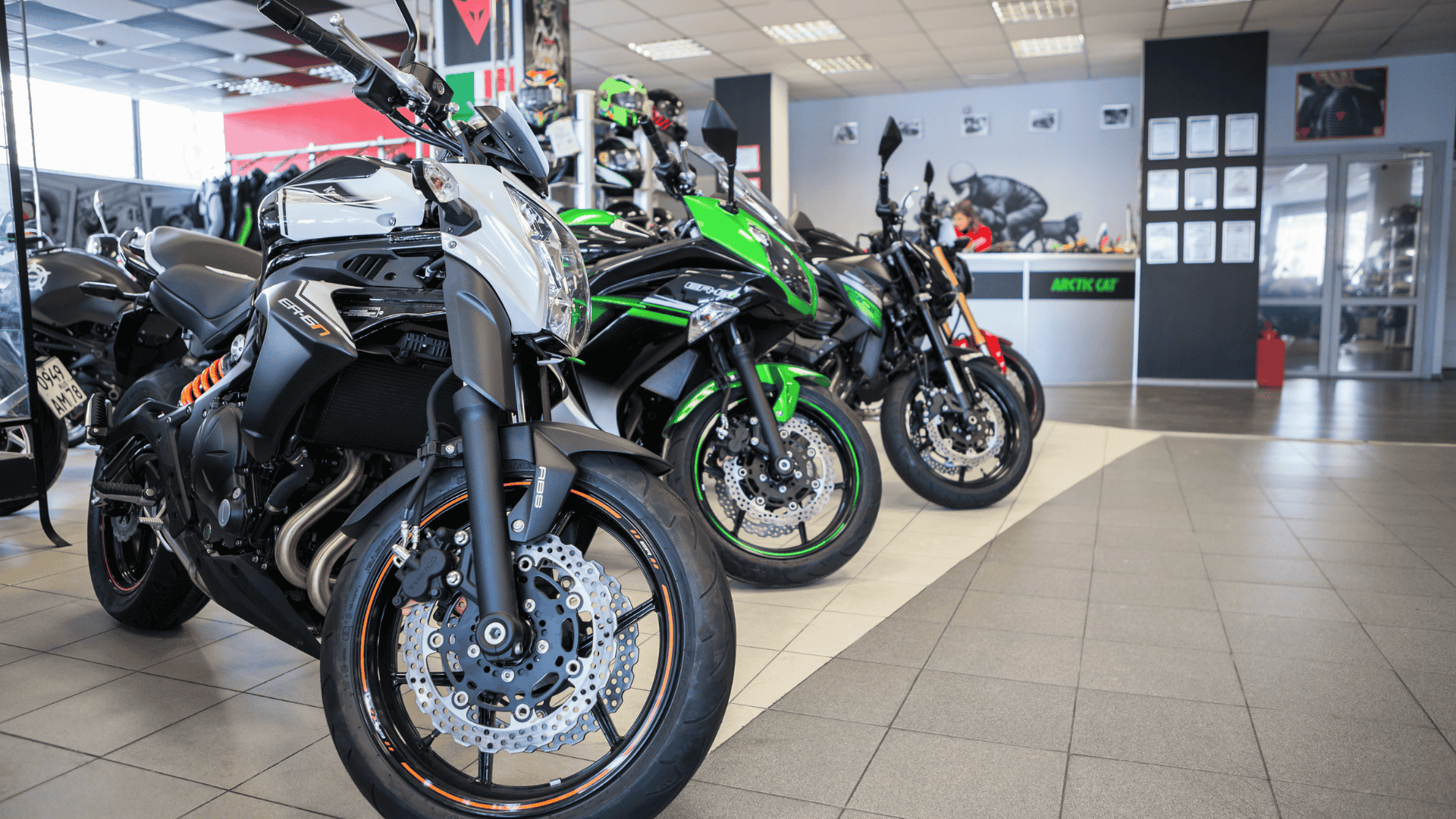
A photo taken inside a motorcycle dealerships, displaying several motorcycles for sale.

Motorcycle Dealer Websites: How to Go from Good to Great

A photo taken inside a motorcycle dealerships, displaying several motorcycles for sale.

Motorcycle Dealer Websites: How to Go from Good to Great

Many riders, when looking for a new bike or dealer, they’re not walking through your doors first—they’re visiting your website. And that visit can either make or break their decision to move forward. While most motorcycle dealers today have a functional online presence, "good enough" isn't enough to stand out in a competitive industry. In this guide, we’ll break down what makes a truly effective motorcycle dealer website. We’ll cover copy, design, content, and strategy, all with the goal of helping you turn your site into a high-performing business asset.

What Should a Dealer Website Actually Do?

Your website isn’t just a digital business card. It should help you:

  • Attract new customers
  • Showcase inventory clearly and professionally
  • Provide answers quickly
  • Reflect your unique brand and personality
  • Drive bookings, test ride requests, or in-store visits

In short, your site should act as a virtual salesperson that works 24/7. But too often, we see websites that are cluttered, out of date, or trying to do too much without a clear strategy.

The Core Foundations of a Great Motorcycle Dealer Website

No matter how sleek your design, if the basics aren’t right, the experience will fall flat. A strong dealer website should:

  • Be mobile-optimised and fast loading. Riders are often browsing on their phones, and slow load times lead to high bounce rates.
  • Feature easy navigation. Make it simple for people to find inventory, contact info, services, and promotions.
  • Offer real-time (or frequently updated) inventory listings. No one wants to call about a bike that was sold last week.
  • Include strong calls to action like "Book a Test Ride," "Contact Us," or "Get a Quote."

Why Copy Matters More Than You Think

It’s easy to focus on photos and forget about the words. But copy is what guides a visitor through the site and builds trust. The best dealer websites use clear, confident language that sounds human, not like a generic brochure.

Speak directly to your customers: highlight benefits, answer questions before they’re asked, and reflect the tone of your dealership. Localised keywords and well-structured text also help improve your SEO, making your site more likely to show up in search results.

The Power of Great Imagery

When it comes to visual impact, high-quality images make all the difference. Dealers should showcase bikes with multiple angles, clear lighting, and close-ups of key features. Bonus points for including short video clips or walkarounds.

Beyond product images, consider showing your team, your showroom, or riders who’ve purchased from you. This builds trust and makes your site feel personal and welcoming.

From Good to Great: What Top-Performing Sites Do Differently

Top-tier dealer websites go beyond the basics. They build brand loyalty and trust through extra features like:

  • Customer testimonials and Google reviews
  • Team bios and behind-the-scenes content
  • Blog posts or news updates for fresh SEO-friendly content
  • Highlighted promotions, events, or demo days
  • Live chat or chatbot features to capture leads

Keep It Fresh, Functional and Focused

A great site isn’t just built once and forgotten. It needs regular maintenance and updates. Outdated promotions, broken links, or a blog last updated in 2022 can make your business look inactive.

Audit your site regularly. Remove or update anything that’s no longer relevant, keep your inventory current, and make sure your contact info and business hours are always accurate.

Conclusion: Make Your Website Work for You

Your dealership’s website should do more than look good—it should help drive real results. That means focusing on clarity, connection, and conversion.

Whether you want a quick audit or need a full update of your website, the Motorcycle Marketing team is here to help. We know the motorcycle industry inside out, and we’ll work with you to make sure your website becomes a true engine of growth. Ready to go from good to great? Contact us to schedule a free consultation.

Keep on reading...

How to stay on top of SEO in the AI era of 2026

How to stay on top of SEO in the AI era of 2026 The way consumers search for information online is being revolutionized in the era of AI answer engines and LLMs (Large Language Models), but what does that mean for marketing professionals in the motorcycle industry? Essentially, ranking highly and winning search traffic is […]

How to Successfully Promote Local Motorcycle Events

How to Successfully Promote Local Motorcycle Events From café meet-ups and ride-outs to dealership open days and demo events, local motorcycle gatherings are at the heart of the riding community. In this blog, we’ll show you how to promote motorcycle events effectively, using a mix of digital and offline tactics to reach the right riders […]

How Sub-500cc Motorcycles Took Over Europe, The UK And Beyond

How Sub-500cc Motorcycles Took Over Europe, The UK And Beyond Across the globe sales of 300cc-500cc motorcycles have been booming and it’s easy to see why. Light enough to be easy to handle, capable enough to commute on, tour with and hit dirt roads on, they come without the price and weight of big ADVs […]
How Integrated Campaigns Fuel Real Results in Motorcycle Marketing

2025-06 | How Integrated Campaigns Fuel Real Results in Motorcycle Marketing

How Integrated Campaigns Fuel Real Results in Motorcycle Marketing

In the motorcycle industry, it’s easy to fall into the trap of thinking marketing means just “running a few ads” or “posting on social now and then.” But brands that rely on isolated tactics often end up with scattered results and no real momentum.

That’s because modern motorcycle marketing isn’t about standalone efforts. It’s about creating campaigns that connect the dots across channels, audiences, and buyer stages. In this article, we’re exploring why integrated motorcycle marketing campaigns deliver stronger results than any one tactic on its own, and how you can apply this strategy to your brand.

What Do We Mean by “Integrated”?

An integrated marketing campaign is a coordinated effort across multiple channels—paid, organic, offline, and online—that works toward a shared goal with a consistent message and brand experience. It’s not about doing everything at once; it’s about making sure everything you do is connected and intentional.

That might look like launching a new product with teaser posts, ambassador content, a press release, and a landing page all built around the same story. Or it could mean promoting a tour by combining newsletter storytelling, paid retargeting ads, and being present at events. Even a smaller campaign becomes much stronger when every element supports the same message and goal.

What it’s not: running a discount ad without updating your website, launching a product without informing your ambassadors, or posting about an event long after it happened, without anything tying it to the bigger brand story.

Why Integration Works

In a well-integrated campaign, each touchpoint strengthens the next. But what each channel achieves depends entirely on your strategy and the stage of the customer journey.

A paid ad might be used to build brand awareness among new riders, or it could serve as a gentle retargeting reminder for those who already interacted with your brand. A newsletter might work as long-term nurturing for interested leads or as the final nudge during a product launch. An ambassador post can introduce someone to your brand or add the final layer of trust that leads to a conversion. Even a conversation at an event might either close a sale or plant the seed for a longer-term relationship.

None of these pieces is meaningless on its own, but they become dramatically more effective when they work together. Think of a rider who sees your ad, then recognises the brand again in a friend’s social post, clicks through a helpful newsletter, and finally meets your team at a show. That purchase isn’t the result of one single ad; it’s the outcome of a thoughtful journey.

Each part of the funnel works on its own, but combining them multiplies the effect. It’s not about one thing working better, it’s about everything working together.

What to Watch Out For

Despite good intentions, many brands fall into common traps. They might run ads with no supporting content, or push out ambassador posts but fail to reshare or engage with them. Sometimes they send a newsletter to an audience that hasn’t heard from them in months, or forget to give each channel a clear, shared message. The biggest mistake? Treating each tactic as a separate effort, rather than tying it into a larger campaign strategy.

How to Get Started

Building an integrated campaign doesn’t mean you have to be everywhere at once. It just means being intentional about how your brand shows up and making sure your efforts are working together.

Here’s a simple framework to get started:

  • Clarify your campaign objective. What’s the one thing you want to achieve—awareness, engagement, bookings, or sales?

  • Choose the right platforms. Focus on where your audience is active and where you can show up consistently.

  • Create aligned content. Every piece—whether it’s a post, email, or ad—should reinforce the core message.

  • Set a realistic timeline. Don’t try to do everything at once. Space it out, build momentum.

  • Track results and refine. Look at performance across channels to learn what’s working and where to improve.

Keep the tone, visuals, and call to action aligned across everything. If you’re driving toward bookings, clicks, or trust, make sure that’s reflected in every touchpoint. And as always: measure what you can, adjust as needed, and learn for the next round.

Final Thoughts

In today’s motorcycle market, visibility isn’t enough. Riders need consistency, connection, and credibility. Integrated marketing campaigns don’t just help brands stand out; they help them stay top of mind, build deeper relationships, and turn one-time buyers into long-term fans.

At Motorcycle Marketing, we specialise in creating campaigns that don’t just make noise, they move riders through the journey. From ads and email to events and ambassadors, we know how to connect the dots. Reach out to see how we can help your brand.

Keep on reading...

How to stay on top of SEO in the AI era of 2026

How to stay on top of SEO in the AI era of 2026 The way consumers search for information online is being revolutionized in the era of AI answer engines and LLMs (Large Language Models), but what does that mean for marketing professionals in the motorcycle industry? Essentially, ranking highly and winning search traffic is […]

How to Successfully Promote Local Motorcycle Events

How to Successfully Promote Local Motorcycle Events From café meet-ups and ride-outs to dealership open days and demo events, local motorcycle gatherings are at the heart of the riding community. In this blog, we’ll show you how to promote motorcycle events effectively, using a mix of digital and offline tactics to reach the right riders […]

How Sub-500cc Motorcycles Took Over Europe, The UK And Beyond

How Sub-500cc Motorcycles Took Over Europe, The UK And Beyond Across the globe sales of 300cc-500cc motorcycles have been booming and it’s easy to see why. Light enough to be easy to handle, capable enough to commute on, tour with and hit dirt roads on, they come without the price and weight of big ADVs […]
The Newsletter: Your Most Underrated Marketing Tool

The Newsletter: Your Most Underrated Marketing Tool in the Motorcycle Industry

The Newsletter: Your Most Underrated Marketing Tool?

When you think about motorcycle marketing, what comes to mind? Instagram reels of dusty trails, a perfectly lit flat lay of new gear, maybe a big stand at EICMA. But there’s one tool that rarely gets the attention it deserves—the humble newsletter, one of the most effective (yet overlooked) motorcycle email marketing tools available today. In this article, we’ll explore why email marketing is still one of the most effective (and underrated) tools in your marketing toolkit, and we’ll share practical advice on how motorcycle brands can use newsletters to boost engagement, build loyalty, and drive real results.

In a world where algorithms change by the week and organic reach on social media feels like a gamble, email is one of the few channels that gives you a direct line to your audience. And yet, too many motorcycle brands are sitting on a goldmine of email subscribers… and doing nothing with it.

We’ve heard it too often: “We sent out two newsletters, didn’t get much response, and gave up.” Or: “We’re building an email list for the future.” The truth is, if you’re not consistently showing up in inboxes, you’re missing out—on traffic, engagement, sales, and loyalty.

Why Newsletters Still Work (Especially in the Motorcycle Industry)

There’s a misconception that email is outdated or ineffective. In reality, motorcycle email marketing continues to outperform most other digital channels when used strategically—especially when you’re trying to reach a niche audience like motorcyclists.

Email gives you a direct line to your riders, without being filtered by ever-changing algorithms. Open rates are often significantly higher than what you’d expect from social media reach, and click-throughs tend to be from readers who are genuinely interested. It’s a channel that invites a more personal, focused kind of interaction.

It’s also an ideal space to tell your brand story, share new products, or inspire riders with tips and destination ideas. When done consistently, newsletters build trust and become something your audience expects—and even looks forward to.

At Motorcycle Marketing, we’ve seen newsletters drive real results for our clients: from a noticeable spike in website traffic to direct inquiries and an uptick in product sales. The impact is real—but only if you actually hit “send.”

One great example is the ABR Festival newsletter. It consistently delivers the latest festival updates straight to subscribers’ inboxes—highlighting new exhibitors, special event deals, programme announcements, and speaker updates. It’s not just promotional; it builds anticipation, keeps the audience informed, and deepens the connection with the community long before anyone sets foot on the festival grounds.

Another standout is the Mosko Moto newsletter. It’s a well-balanced mix of product and event updates, company news, and behind-the-scenes content that shows what the team is up to throughout the year. From new gear drops to stories from the road and team adventures, it gives subscribers a sense of being part of the brand’s journey—not just the sales funnel.

Common Mistakes Motorcycle Brands Make with Email

So why aren’t more brands doing this well?

One major issue is inconsistency. Many companies try once or twice, don’t get the instant results they hoped for, and give up too soon. Another common mistake is only showing up in someone’s inbox when there’s a discount to announce. If every email is a hard sell, subscribers lose interest fast.

We’ve also seen brands collect email addresses—sometimes thousands of them—and never use the list. And when they do, the content often feels generic or disconnected from what their audience actually cares about. The result? Low engagement and missed opportunities.

What to Include in a Great Newsletter

You don’t need to reinvent the wheel every time you write a newsletter. Start with a repeatable structure that keeps things simple and engaging. A well-rounded newsletter typically includes:

  • A short, compelling intro – Something personal or topical that sets the tone.

  • One or two key stories or updates – This could be a customer highlight, a travel tip, a new blog, or a behind-the-scenes update.

  • A clear call to action (CTA) – Whether it’s “Read more,” “Shop now,” or “Join us at this event,” every email should have one main goal.

  • Good visuals – Clean, high-quality photos that reflect your brand’s style and tone.

  • An authentic voice – Write like a rider, not like a press release.

The best newsletters add value first. Share helpful content, provide inspiration, or give a reason to smile. When readers enjoy your emails, they’re far more likely to click through and eventually buy—without feeling like they’re being sold to.

Where to Find Content Ideas

Not sure what to talk about? The content is probably already around you. You can highlight a recent blog or news update, share a great story from an ambassador or customer, or provide a look at what’s happening behind the scenes at your company. Got an event coming up—or just wrapped one up? Share the details. Even something as simple as answering a commonly asked customer question or showing a great photo from a recent ride can make for a strong, engaging newsletter.

Practical Tips for Getting Started

Still not convinced? Here’s how to make email work without overcomplicating things.

Pick a rhythm that feels manageable—monthly is often a great place to start. Create a simple template you can stick to, so each edition doesn’t feel like starting from scratch. Don’t wait until your email list is “big enough.” If you’ve got even 300 riders who asked to hear from you, show up for them.

If you’re already creating content for your website or social media, repurpose it. A great Instagram post can become the heart of your next email. And when you do start sending, make sure to track your open and click-through rates. Over time, these numbers will tell you what your audience actually wants to read more of.

Start Small, But Start

You don’t need flashy graphics or a massive list to create a newsletter that works. You just need to show up, be real, and provide value.

In an industry built on connection, shared experiences, and loyalty, motorcycle email marketing can be one of your strongest tools to build and maintain rider relationships—on your own terms, without relying on the algorithm gods.

Whether you need help building a strategy, writing content, or just figuring out what to say each month, we’re here to support your motorcycle email marketing efforts—whether you’re starting from scratch or levelling up an existing program. Want to turn your email list into a loyal rider community? Let’s chat.

Keep on reading...

How to stay on top of SEO in the AI era of 2026

How to stay on top of SEO in the AI era of 2026 The way consumers search for information online is being revolutionized in the era of AI answer engines and LLMs (Large Language Models), but what does that mean for marketing professionals in the motorcycle industry? Essentially, ranking highly and winning search traffic is […]

How to Successfully Promote Local Motorcycle Events

How to Successfully Promote Local Motorcycle Events From café meet-ups and ride-outs to dealership open days and demo events, local motorcycle gatherings are at the heart of the riding community. In this blog, we’ll show you how to promote motorcycle events effectively, using a mix of digital and offline tactics to reach the right riders […]

How Sub-500cc Motorcycles Took Over Europe, The UK And Beyond

How Sub-500cc Motorcycles Took Over Europe, The UK And Beyond Across the globe sales of 300cc-500cc motorcycles have been booming and it’s easy to see why. Light enough to be easy to handle, capable enough to commute on, tour with and hit dirt roads on, they come without the price and weight of big ADVs […]
The Power of Brand Ambassadors: How to Find and Work with the Right Riders

The Power of Brand Ambassadors

The Power of Brand Ambassadors: How to Find and Work with the Right Riders

In the motorcycle world, trust and authenticity matter more than anything. Riders don’t just buy products—they buy into lifestyles, experiences, and communities. That’s why brand ambassadors have become such a powerful force in motorcycle marketing. A well-chosen ambassador doesn’t just promote a brand; they live it, breathe it, and inspire others to do the same.

But how do motorcycle brands find the right ambassadors, and how can they create a program that drives real engagement? This guide breaks it down, step by step.

What Is a Motorcycle Brand Ambassador?

A brand ambassador is a passionate rider who actively represents and promotes a brand, often through social media, events, and word-of-mouth. Unlike (some) influencers, who may do one-off paid promotions, ambassadors form long-term relationships with brands and integrate them naturally into their content.

The best ambassadors don’t just post product photos—they share real riding experiences, help fellow riders, and tell stories that resonate with their audience. Their authenticity makes their recommendations far more powerful than traditional advertising.

The Benefits of a Strong Ambassador Program

A well-structured ambassador program brings multiple advantages for motorcycle brands. Authenticity and trust are key, as riders believe recommendations from fellow bikers more than corporate messaging. Ambassadors create organic reach and engagement, sparking conversations that feel genuine and relatable. Brands also benefit from high-quality user-generated content (UGC)—real-world images, videos, and testimonials that add credibility and can be repurposed for marketing. Compared to traditional advertising, a network of engaged ambassadors is a cost-effective way to maintain long-term brand exposure. Lastly, a strong ambassador program fosters community and loyalty, helping brands stay connected with the riding world in a meaningful way.

How to Find the Right Ambassadors for Your Brand

Not all riders make great ambassadors. The best ones are passionate, influential within their niche, and genuinely align with your brand’s values. Here’s how to find them.

1. Look Within Your Existing Community

Your best ambassadors may already be using your products. Riders who consistently tag your brand in their posts, share high-quality riding content, and actively engage with your brand and fellow bikers are strong candidates. These riders are already natural advocates—turning them into official ambassadors strengthens their connection to your brand and ensures that their enthusiasm continues to grow.

2. Engage with Riders Who Align with Your Brand Identity

Motorcycle culture is diverse, and different brands appeal to different kinds of riders. Adventure-focused brands should seek out riders who explore remote trails, document their journeys, and have a strong connection with the adventure riding community. Custom and café racer brands might look for builders and urban riders who showcase their creativity and mechanical skills. Meanwhile, racing-related brands should connect with track enthusiasts and performance riders who have a deep knowledge of high-performance riding and gear. Instead of focusing on follower count, prioritise riders who have a truly engaged and relevant audience that aligns with your brand.

3. Leverage Social Media & Industry Events

Events like EICMA, ABR Festival, and BMW Motorrad Days are prime opportunities to meet passionate riders in person. Many of the best ambassadors aren’t influencers in the traditional sense—they are respected figures within their riding communities who naturally influence others through their experiences and expertise.

Social media is another key tool for identifying potential ambassadors. Instagram, Facebook groups, and motorcycle forums are filled with riders who share their experiences, help others, and contribute to the motorcycle culture. Engaging with these riders, commenting on their content, and building relationships over time can lead to meaningful partnerships.

4. Prioritise Passion Over Follower Count

A rider with a smaller but highly engaged following can often be more valuable than a high-profile influencer with hundreds of thousands of passive followers. The best ambassadors are those who genuinely connect with their audience, respond to comments, and actively participate in the motorcycle community. They offer genuine insights about gear, share personal riding experiences, and have a strong, trusted voice within their niche. Rather than looking at numbers alone, focus on riders who have an authentic connection with their followers and can speak about your brand in a way that feels natural and credible.

Setting Up a Successful Ambassador Program

Once you’ve identified the right ambassadors, it’s time to create a program that benefits both the brand and the riders. A well-structured approach ensures that ambassadors feel valued while driving real impact for your brand.

1. Define Your Goals & Expectations

Before launching your ambassador program, it’s important to establish clear objectives. Decide what you want your ambassadors to do. Are they expected to share real riding experiences on social media and at events? Should they create user-generated content such as photos, videos, and testimonials? Will they represent your brand at motorcycle industry events or rallies? Perhaps you want them to test new products and provide feedback. Defining these expectations from the outset helps prevent misunderstandings and ensures a mutually beneficial relationship for both parties.

2. Offer Real Value to Ambassadors

A strong ambassador program should provide genuine benefits beyond just free products. Many brands offer early product access, allowing ambassadors to test new gear before it hits the market, giving them a sense of exclusivity and importance. Others invite their ambassadors to special events, such as organized rides, workshops, or factory tours, where they can connect with the brand and fellow riders on a deeper level.

Some programs also include revenue-sharing opportunities, such as affiliate commissions, giving ambassadors a financial incentive to stay engaged long-term. Additionally, when ambassadors contribute their professional skills—such as photography, videography, or in-depth content creation—for specific campaigns and projects, brands should consider offering financial compensation. While many ambassadors are happy to promote brands they love, recognising the value of professional work by paying for high-quality imagery and video content ensures a mutually respectful and professional collaboration.

Many successful brands go beyond standard perks, creating unique experiences that make ambassadors feel truly valued. Whether it’s exclusive adventure trips, behind-the-scenes access to product development, or co-creating content that shapes the brand’s storytelling, these efforts deepen the ambassador’s connection with the brand and encourage long-term advocacy.

3. Encourage Storytelling Over Sales

The most effective ambassadors don’t sell—they share. Rather than focusing on promotional content, successful brands encourage their ambassadors to share real-life riding experiences, travel stories, and product insights. For example, an ambassador might document their cross-country journey, sharing the highs and lows of the adventure while naturally showcasing how your brand’s gear played a role in their trip.

Ambassadors should focus on helping and inspiring fellow riders, whether through travel stories, gear advice, or riding tips. By shifting the emphasis from direct promotion to storytelling, brands can create a stronger emotional bond with their audience, leading to deeper engagement and brand loyalty.

Conclusion: The Long-Term Value of Brand Ambassadors

A great ambassador isn’t just a marketing tool—they’re an extension of the brand. When riders see real people using and loving a brand, they connect with it in a way that no ad campaign can achieve.

Motorcycle brands that invest in authentic ambassadors will see stronger engagement, trust, and customer loyalty. Want to build a brand ambassador program that works? Motorcycle Marketing can help you connect with the right riders. Contact us now to find out how.

Keep on reading...

How to stay on top of SEO in the AI era of 2026

How to stay on top of SEO in the AI era of 2026 The way consumers search for information online is being revolutionized in the era of AI answer engines and LLMs (Large Language Models), but what does that mean for marketing professionals in the motorcycle industry? Essentially, ranking highly and winning search traffic is […]

How to Successfully Promote Local Motorcycle Events

How to Successfully Promote Local Motorcycle Events From café meet-ups and ride-outs to dealership open days and demo events, local motorcycle gatherings are at the heart of the riding community. In this blog, we’ll show you how to promote motorcycle events effectively, using a mix of digital and offline tactics to reach the right riders […]

How Sub-500cc Motorcycles Took Over Europe, The UK And Beyond

How Sub-500cc Motorcycles Took Over Europe, The UK And Beyond Across the globe sales of 300cc-500cc motorcycles have been booming and it’s easy to see why. Light enough to be easy to handle, capable enough to commute on, tour with and hit dirt roads on, they come without the price and weight of big ADVs […]